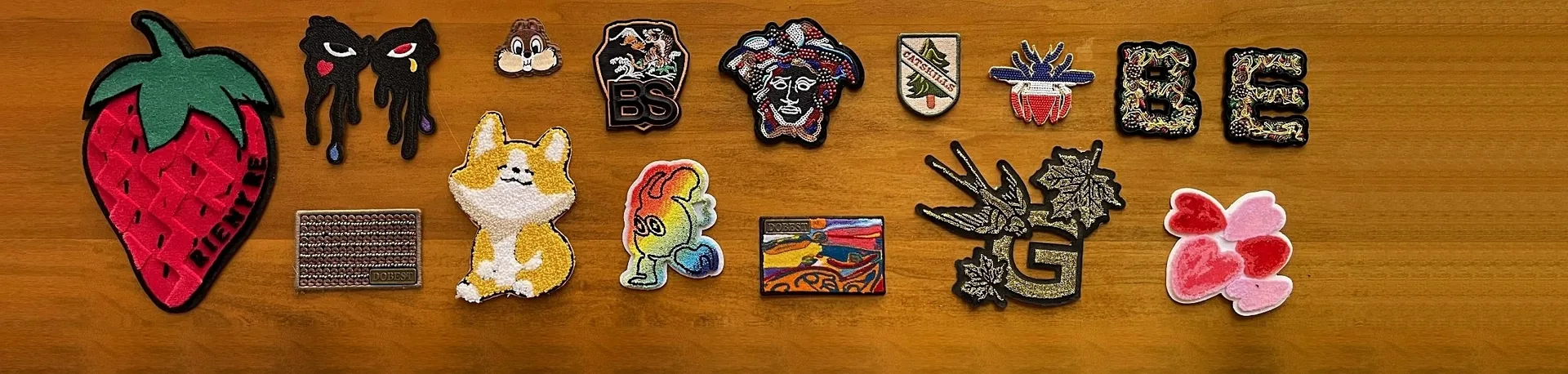
Technical Articles
article current location: Home > Technical Articles
 Release time:2026-10-16
 page views:
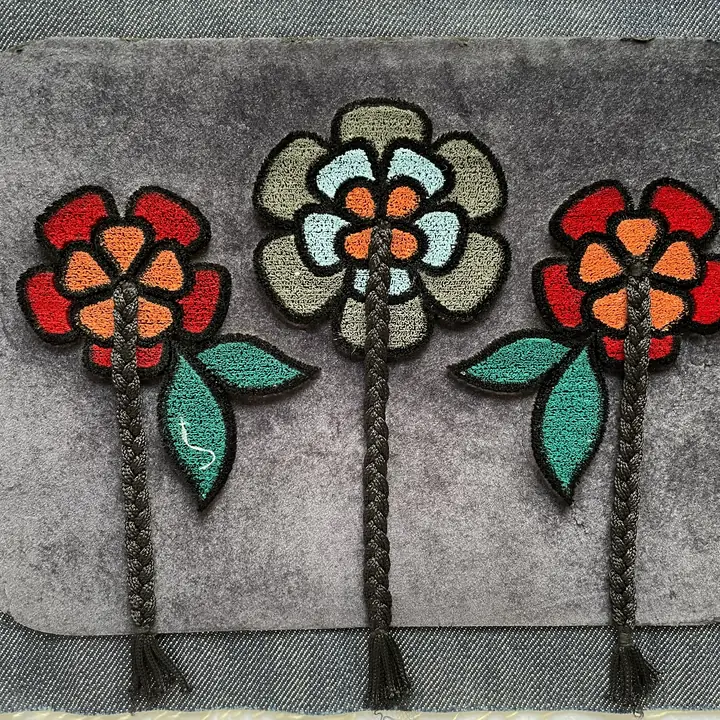
【Core Definition and Quick Selection】Tassel embroidery (Tassel / Fringe Embroidery; also called fringe embroidery, tassel trim, fringe trim embroidery, or tassel lace) is a dynamic fringe embroidery made by arranging loops to secure the roots and then precisely cutting the bobbin thread, so the tail ends hang naturally and swing with movement. Materials are mainly rayon, polyester, cotton thread, and metallic-luster thread. The roots are securely locked, and the threads are lively and flowing. Standard tassel length is 10–50 mm, MOQ 300 pcs, simple samples: 3 styles free of charge, standard sampling: 24–48 hours, bulk production: 5–10 working days. Suitable for skirt hems, shawls and scarves, ethnic-style apparel, and fashion bags.
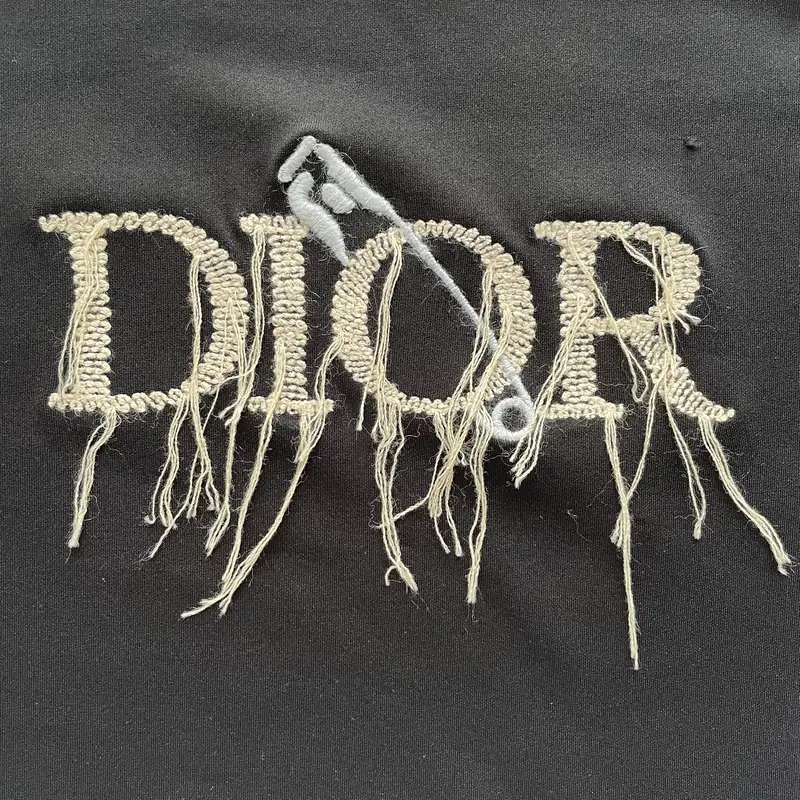
Tassel embroidery is a decorative embroidery that “makes embroidery move”: the embroidery thread is densely locked at the root, while the tail ends are left as free-hanging thread ends. When a person moves or the wind blows, the tassels swing naturally—a dynamic effect that static techniques such as flat embroidery and chenille embroidery cannot achieve.
Traditional embroidery pursues “close-fitting, flat, and three-dimensional” effects, while tassel embroidery does the opposite, deliberately retaining hanging free thread tails so that flat fabric gains real depth and movement. At rest, it is a neat row of hanging tassels; when walking, it ripples like waves. It is a signature element in bohemian, new Chinese style, Western cowboy, and music-festival styles.
Ordinary flat embroidery “stitches the pattern fixed onto the fabric”; tassel embroidery “leaves the thread on the fabric and lets it come alive.”
In apparel sourcing and export communication, “tassel” has various trade terms and names. The core is the same structure, while the naming sources emphasize different aspects:
| Industry Term | English Equivalent | Naming Source and Focus |
|---|---|---|
| tassel embroidery | Tassel Embroidery | Main name; emphasizes the finished form of “tassel-like hanging and swingable.” |
| fringe embroidery / tassel embroidery | Fringe Embroidery | Common folk name; named from the visual impression of “tassels/fringe.” |
| fringe trim embroidery / tassel lace | Cut-loop Fringe / Fringe Trim | Emphasizes rows of fringe trim, often seen on home textiles and bag edges. |
| machine tassel embroidery | Machine Tassel | Distinguishes from handmade tassels; emphasizes batch and consistent production by computerized embroidery machines. |
Craft boundaries that must be clarified:
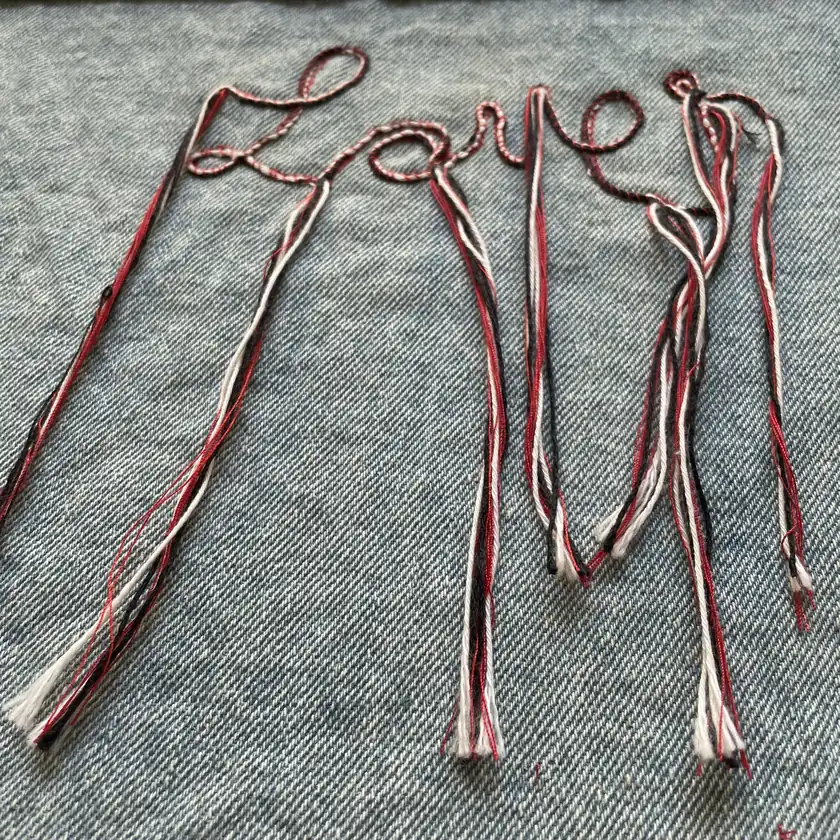
The basic structure of tassel embroidery is “fixing point + free end”: the embroidery thread is concentrated and fixed at an anchor point (usually reinforced with dense fixing stitches or backstitch locks), and a certain length of thread ends is left outside the anchor point without cutting, allowing them to hang freely and form tassels. According to the forming route, there are mainly three types:
Two technical difficulties:
| Process Control Item | Standard Capability Specification | Design and Engineering Notes |
|---|---|---|
| Common tassel length | CNC-programmed within the 10–50 mm range | 20–35 mm is the least prone to tangling and is the most commonly used range; longer tassels place greater load on the anchor point and increase snagging and packing costs. |
| Length tolerance | Controlled by fixed-length trimming | Manual combing and fixed-length trimming keep the overall appearance largely consistent. |
| Form options | Rounded looped ends / cut open ends available | Choose according to style and durability requirements: cut ends for a flowing look, looped ends for abrasion resistance. |
| Common threads | Rayon, polyester, cotton, metallic-luster thread | Drape is the key material-selection criterion; tassels should hang softly rather than feel stiff. |
| Suitable substrates | Satin ribbon, webbing, heavyweight fabric, leather, decorative base fabric | The anchor point bears concentrated tension, so the substrate needs sufficient strength. |
| Colorfastness requirements | Dark and vivid colors require upfront rub-fastness and light-fastness testing | Tassels have a large surface area, high exposure and constant movement, so requirements are higher than for standard embroidery. |
| Care and weather resistance | Hand wash and gentle handling recommended; avoid machine washing and snagging on sharp objects | Hang in the shade to dry after washing so tassels hang naturally and smoothly. |
Core advantages (Pros):
Process boundaries and physical limitations (Cons):
Common garment placement areas and recommended sizes:
Recommended substrates: Satin ribbon, webbing, heavyweight fabric, leather, decorative base fabric; in home textiles, also commonly seen on the four edges of cushions, curtains, tablecloths and decorative wall hangings.
Not suitable for: Next-to-skin products for young children, everyday garments requiring frequent machine washing, work environments with frequent contact with sharp objects or high friction, and projects highly sensitive to transport and storage costs.
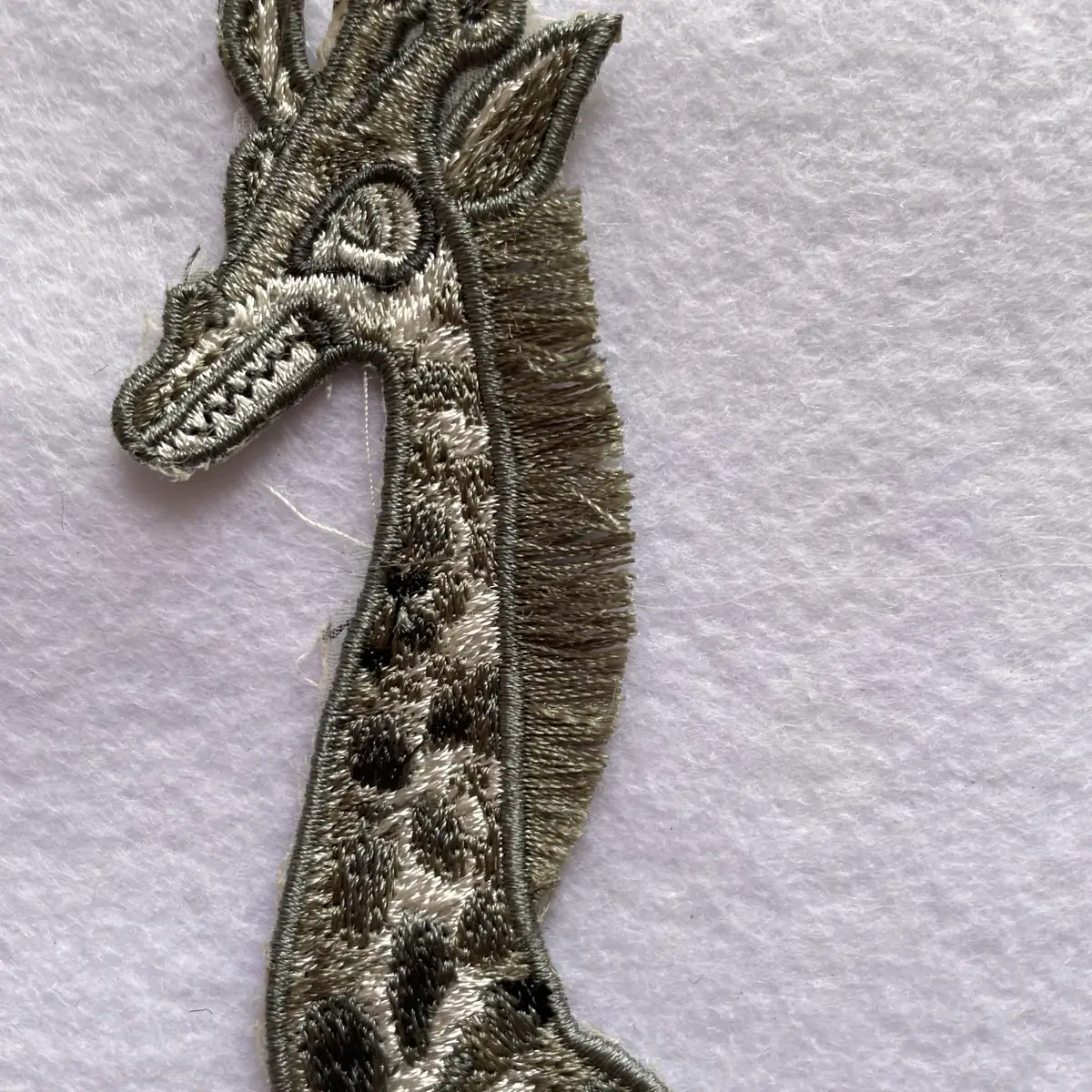
Tassels can be used alone as trim or as accents combined with other processes to create richer layered effects:
| Technique Category | Dimensional and Texture Form | Hand Feel | Minimum Line Width | Recommended Style Applications | Relative Cost |
|---|---|---|---|---|---|
| Tassel embroidery | Hanging tassel form, swingable | Drapey, flowing, dynamic | Recommended tassel length ≥ 10 mm | Edge trims, resort style, ethnic style, stage | High (labor-intensive) |
| Toothbrush embroidery | Upright pile strips | Crisp, supportive | ≥ 1.5 mm | Main body panels, 3D lettering, streetwear | Medium |
| Chenille embroidery | Looped pile surface | Soft, fluffy | ≥ 1.5 mm | Main body panels, playful children’s styles, sportswear | Medium |
| Regular flat embroidery | Flat stitching | Smooth, close to the surface | ≥ 1.0 mm | Fine motifs, lettering, badges | Low |
One-line memory aid: in toothbrush embroidery the pile faces up, while in tassel embroidery the pile faces down; one is for the main body, the other for edges.
Q1 | Can tassels fall off or threads unravel in tassel embroidery?
Anchor points are secured with dense stitches or tightly wrapped thread bundles; under normal use they are not prone to detaching, and we pull-test each bundle for verification. However, tassel structures can be snagged and torn by external force, so avoid sharp objects during use.
Q2 | Can tassels be machine washed?
Hand washing and gentle handling are recommended; avoid machine washing. Mechanical agitation in a machine can cause tassels to tangle and may lead to snagging and detachment; after washing, hang in the shade to dry so they hang naturally.
Q3 | What is the maximum length tassels can be made?
We can produce anything from short tassel accents to longer drapey tassels, depending on base material strength, application, and design intent. Longer tassels mean higher snagging risk and cost, and may affect product function.
Q4 | Can tassel lengths be made very even?
Yes. Overall consistency is achieved through loop-length calibration, batch cutting, and manual combing. However, a handmade look is characteristic of tassel craftsmanship; strictly machine-even tassels would lose natural drape, and we will confirm this balance with you.
Q5 | Are tassels suitable for children’s wear?
This requires assessment. Tassels can be pulled and may entangle, posing risks for products for young children. We will flag the risks and recommend shorter tassels, lower density, or alternative processes, along with pull testing, and note age suitability recommendations in the delivery documentation.
Dongguan Dobest Industrial Co., Ltd. (Dobest) was founded in 2013 and specializes in the custom R&D of specialty computerized embroidery and challenging embroidery. It has a 3,000 m² modern production workshop and more than 30 specialty computerized embroidery machines. The company has passed Disney ILS and adidas SEA international brand factory audits and has received a Grade A taxpayer credit rating for four consecutive years. Raw materials come with OEKO-TEX® Standard 100 and SGS test reports from suppliers, and we support customer-specified testing as needed. We support R&D and customization from artwork and samples, as well as rapid sampling.
Service hotline / WeChat: 13712297700 | Official website: dobest.hk | Submit a sampling request online
We can visit customers on-site in Dongguan, Shenzhen, Foshan (including Shunde), Zhongshan, Guangzhou, Zhuhai, Huizhou, Jiangmen and other Pearl River Delta cities; for Guangzhou (Yuexiu, Haizhu, Liwan, Tianhe, Baiyun, Huangpu, Panyu, Huadu, Nansha, Conghua, Zengcheng) and Dongguan (Humen, Houjie, Chang'an, Dalang, Changping, Dalingshan, Shipai, Chashan, Tangxia, Liaobu, Dongcheng, Nancheng, Wanjiang and other towns and subdistricts), we can usually meet on-site within half a day to discuss samples and cooperation.

Hotline / WeChat:
137-1229-7700 2/F, Bldg E, Jinmao Xincheng, No.7 Jiedong South Rd, Xiaojiejiao, Humen, Dongguan, Guangdong, China Phone: 0769-81517903
 mclau@dobest.hk
Hotline:
13712297700
0769-81517903