Technical Articles
article current location: Home > Technical Articles
 Release time:2026-10-16
 page views:
【Core Definition and Quick Selection Guide】Cross-stitch embroidery (also known as machine cross-stitch embroidery or pixel embroidery) is an embroidery technique in which Dobest uses computerized embroidery machines and polyester embroidery thread to recreate hand-stitched cross-stitch steps. Stitches are square and full, with minimal thread buildup on the reverse; grid size is 1.5–3.0 mm, and Aida cloth is not required. MOQ is 300 pcs; free simple samples for 3 styles; sampling in 24–48 hours; bulk production in 5–10 business days. Suitable for apparel, childrenswear, home textiles, and creative fabric products.
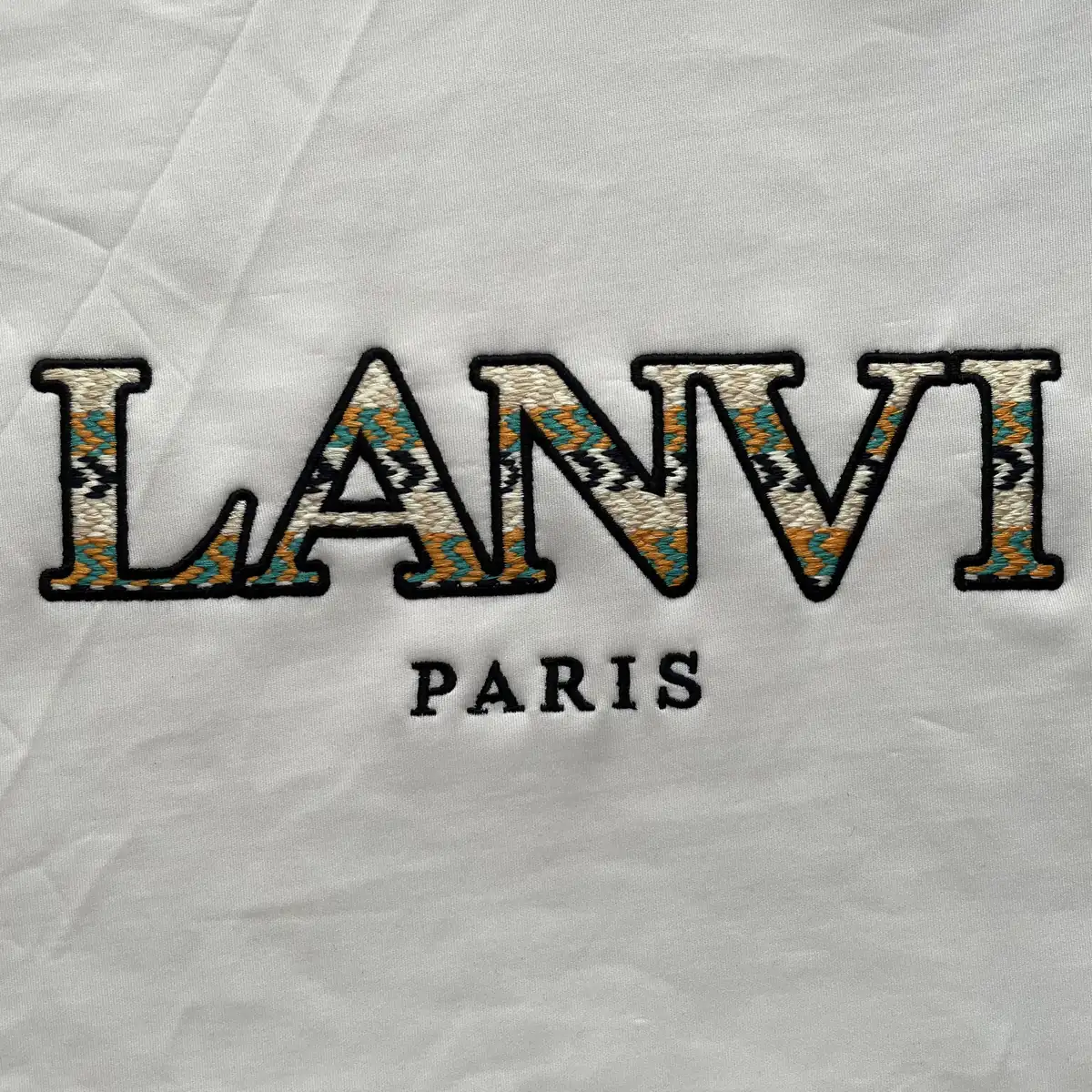
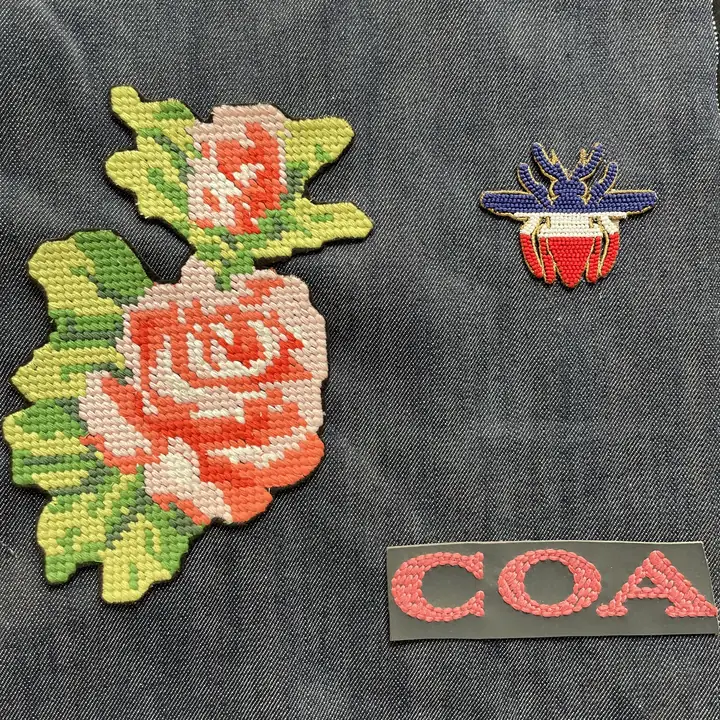
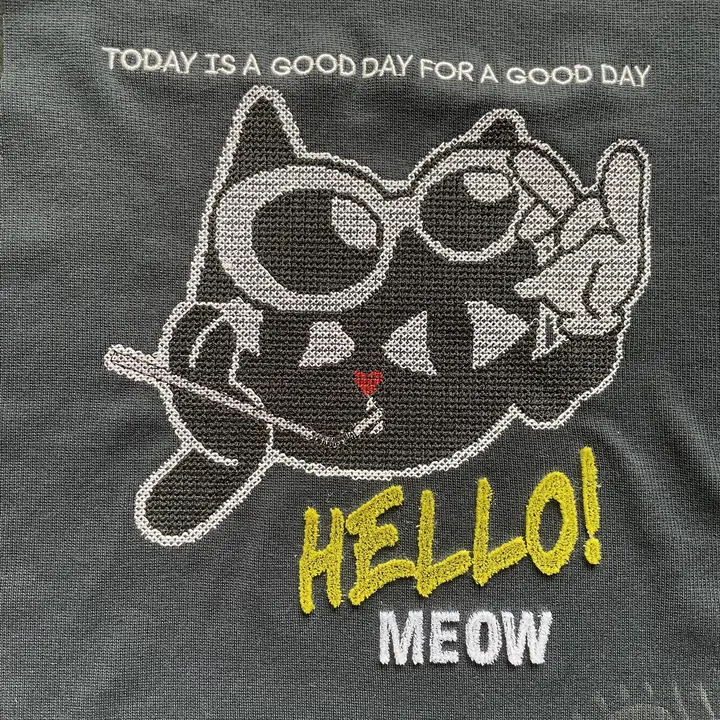
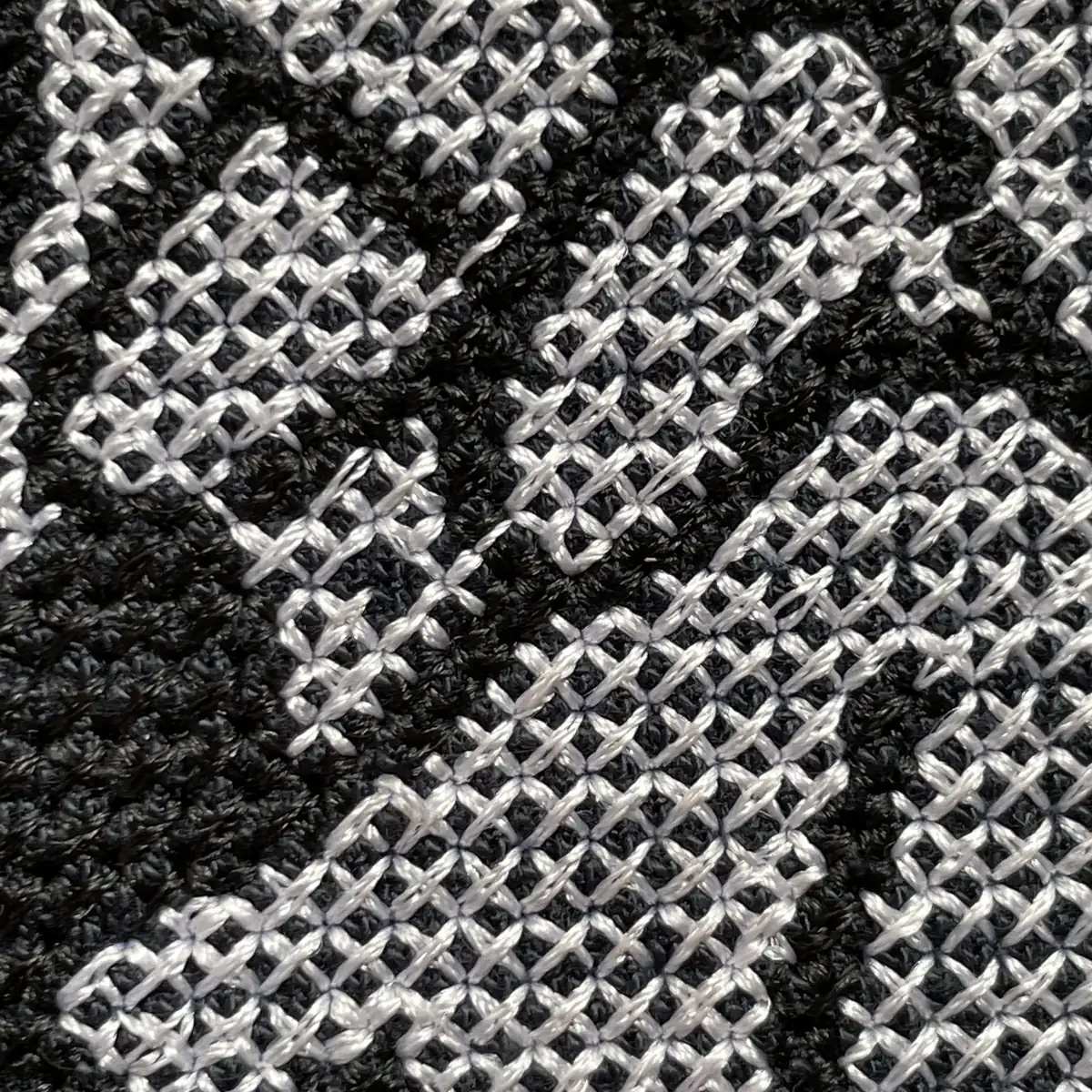
Cross-stitch embroidery is, simply put, “a picture assembled from small Xs”: each grid square is one crossing cross-stitch, and the design is built from thousands of regular X squares, like a mosaic. Up close, it has a subtle relief texture; from a distance, it carries a pixelated look and a handcrafted feel—retro and playful.
It has two “cultural faces” at the same time: one is the rustic handcrafted feel of European folk counted-thread embroidery, Eastern European folk motifs, and Nordic sweater patterns; the other is the trendy gaming feel of 8-Bit pixel games, Minecraft, and pixel-style anime collaborations. The same craft can speak two very different marketing languages and appeal to different customer groups. If a brand is specifically after this character, flat embroidery or printing generally cannot replicate it.
Standard flat embroidery lays down color in continuous smooth lines, layer by layer; cross-stitch embroidery builds the image from individual crossing X squares like a pixel picture.
In apparel sourcing and export communications, “cross-stitch embroidery” is often referred to by several names:
| Industry Term | English Equivalent | Source and Emphasis of the Term |
|---|---|---|
| Cross-Stitch Embroidery | Cross-Stitch Embroidery | The most common term; directly points to the core stitch form of crossing threads. |
| Computerized Cross-Stitch / Machine Cross-Stitch | Machine Cross-Stitch Embroidery / Computerized Cross-Stitch Embroidery | Emphasizes volume production by computerized embroidery machines, as distinct from hand counted-thread work. |
| Pixel Embroidery | Pixel Embroidery | Named for the finished visual, highlighting the mosaic and 8-Bit pixel-game look. |
| Machine Counted-Thread Embroidery / Geometric Grid Embroidery | Counted Cross-Stitch Embroidery | A machine-embroidery continuation of the folk “counted-thread” craft, emphasizing the geometric grid and grid-based placement. |
Craft boundaries to clarify:
Cross-stitch embroidery looks simple—one square equals one X, formed by two crossing stitches; the “resolution” of the design is determined by square size. Smaller squares give finer detail; larger squares give a stronger pixelated look. Making it regular, attractive, and efficient on standard fabric depends on digitizing and machine precision. From source artwork to a machine-ready stitch file, there are four steady steps:
In addition, machine cross-stitch embroidery uses three key techniques: Half stitches and three-quarter stitches are used for outlines, transitions, and gradient edges; factories that use half stitches generally achieve noticeably richer layering. Backstitch outlines trace a solid line around the motif, giving the pixelated design a clear boundary; without backstitching, the design can look loose. Stitch-path optimization connects individual Xs over short distances where possible, reducing jump stitches on the back and the number of thread changes; this directly affects cost and back-side neatness.
Creating a regular grid on standard fabric depends on machine precision and digitizing algorithms—the crossing direction of every X needs to be consistent across the design; otherwise, different light-reflection angles can create scattered highlights within the same color block and disrupt the visual order of the whole design. In effect, the beauty of cross-stitch embroidery comes from strict regularity.
| Process control item | Standard capability | Design & engineering notes |
|---|---|---|
| Common grid size | 1.5 mm – 3.0 mm (2.0 mm is the typical value) | Below 1.0 mm, stitches tend to merge and distort; above 4.0 mm, the grid looks loose and slack. |
| Relationship between stitch count and area | Halving the grid size roughly quadruples the stitch count | This is the main driver of price differences in quotations. |
| Number of colours supported | Multi-needle heads handle automatic colour changes across a wider colour range | The more colours, the more frequent the thread changes, the lower the efficiency and the higher the cost. |
| Is cross-stitch fabric required? | Not required; machine embroidery runs directly on standard fabrics | A virtual grid is generated through machine precision and digitising algorithms, which keeps the stitches stable. |
| Maximum field size per design | 300 mm × 300 mm as standard | Supports front-chest main designs, large back panels and full-width hanging-decoration embroidery. |
| Wash resistance and care standards | Suitable for regular machine washing (washing inside out at ≤ 40 °C is recommended); the dense stitching is wash-resistant and less prone to loosening. |
Core advantages (Pros):
Process boundaries and physical limitations (Cons):
Common embroidery placements on garments and recommended sizes:
Recommended fabrics: linen, coarse-count cotton canvas, washed denim, oxford, heavy sweatshirt fleece and wool. Fabrics with natural texture complement the handcrafted feel of cross-stitch and hold the grid shape better; the warp and weft density of the base fabric should be even, otherwise the grid can distort easily.
Cross-stitch can be worked as conventional thread embroidery, or used as the main body or base in combination with other techniques:
| Embroidery technique | Dimensional and texture profile | Hand feel | Minimum line width | Recommended style fit | Relative cost |
|---|---|---|---|---|---|
| Cross-stitch embroidery | Grid/pixel effect, slightly raised | Flat and soft with texture | Approx. 1.5 mm (single grid cell) | Vintage handcraft, 8-bit pixel, traditional folk counted-thread patterns | Medium-high (based on stitch count) |
| Flat embroidery | Flat, supports gradients | Smooth and conforms to fabric | Approx. 1.0 mm | Logos, lettering, realistic illustration | Medium |
| Appliqué embroidery | Panel joining | Slight thickness | Depends on appliqué edge | Large colour blocks, cartoons | Medium |
| Chenille embroidery | Raised pile, soft and lofty | Soft and fluffy | Relatively thick | Lettering, home textiles, cute pets | Medium-high |
| Digital printing | Smooth and flat | No texture | Very fine | Photo-realistic, large multi-colour areas | Low (for large areas) |
Quick takeaway: choose cross-stitch embroidery for texture and a handcrafted feel; choose printing for very low cost and large multi-colour areas; the two are often used together.
Q1 | Will cross-stitch embroidery come loose or unravel after washing?
No. Cross-stitch embroidery is a stitch-only process of densely crossed short stitches; the stitches interlock and are durable under normal washing. We recommend washing inside out at ≤ 40°C and avoiding vigorous rubbing, which can cause fuzzing.
Q2 | Which is better: cross-stitch embroidery or digital printing?
The textures are completely different. Printing is flat, offers near-unlimited colours and low cost; cross-stitch has stitch thickness, a handcrafted feel, grid texture and wash durability. Choose embroidery for texture and a premium look, or printing for very low cost and large multi-colour areas; the two are often used together.
Q3 | Can you produce to our specified colour codes?
Yes. Please provide colour codes or physical colour swatches, and we will set up colours according to the specified codes. For bulk production, we use thread from the same production batch so batch colours remain largely consistent.
Q4 | How detailed can designs be? Can you reproduce photos?
Cross-stitch resolution is limited by grid size and is inherently pixelated. Photo-realistic results cannot be achieved with cross-stitch; flat embroidery, digital printing or a combination should be used instead. Before sampling, we will give an honest assessment and offer three options: high-resolution, standard and simplified. We will not take on work for effects we cannot achieve just to secure an order.
Q5 | Why is cross-stitch embroidery particularly suited to childrenswear?
Three reasons: visual language fit—its pixelated character naturally conveys a cute, playful feel; structural safety—the stitch-only construction has no rigid raised elements; wash durability—dense stitching with no additional components. For childrenswear clients, cross-stitch embroidery is well worth recommending proactively.
Dongguan Dobest Industrial Co., Ltd. (Dobest) was founded in 2013 and has focused on the R&D and manufacturing of specialty computerised embroidery for many years. It has a 3,000 ㎡ modern production workshop and more than 30 specialty computerised embroidery machines. The company has passed Disney ILS and adidas SEA factory audits for international brands and has received an A-level taxpayer credit rating for four consecutive years.
Service hotline / WeChat: 13712297700 | Official website: dobest.hk | Submit a sampling request online
Customers in core Pearl River Delta cities can access on-site coordination services, covering Dongguan, Shenzhen, Foshan (including Shunde), Zhongshan, Guangzhou, Zhuhai, Huizhou, Jiangmen, and other areas. For Guangzhou urban districts and surrounding areas (Haizhu, Liwan, Tianhe, Baiyun, Huangpu, Panyu, Huadu, Nansha, Conghua, Zengcheng) and local Dongguan areas (Humen, Houjie, Chang'an, Dalang, Changping, Dalingshan, Shipai, Chashan, Tangxia, Liaobu, Dongcheng, Nancheng, Wanjiang, and other towns and subdistricts), visits for discussion and sample review can usually be arranged within half a day.
Hotline / WeChat:
137-1229-7700 2/F, Bldg E, Jinmao Xincheng, No.7 Jiedong South Rd, Xiaojiejiao, Humen, Dongguan, Guangdong, China Phone: 0769-81517903
 mclau@dobest.hk
Hotline:
13712297700
0769-81517903