Technical Articles
article current location: Home > Technical Articles
 Release time:2026-10-16
 page views:
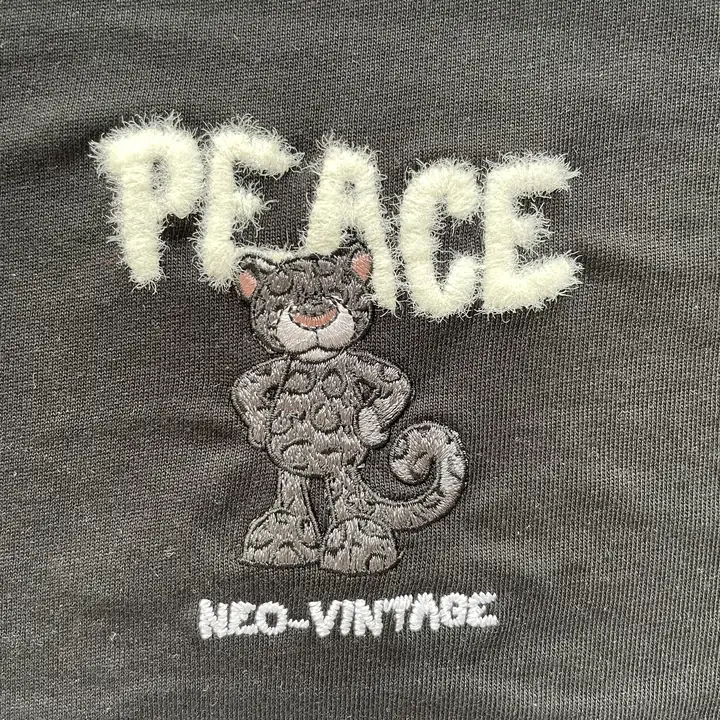
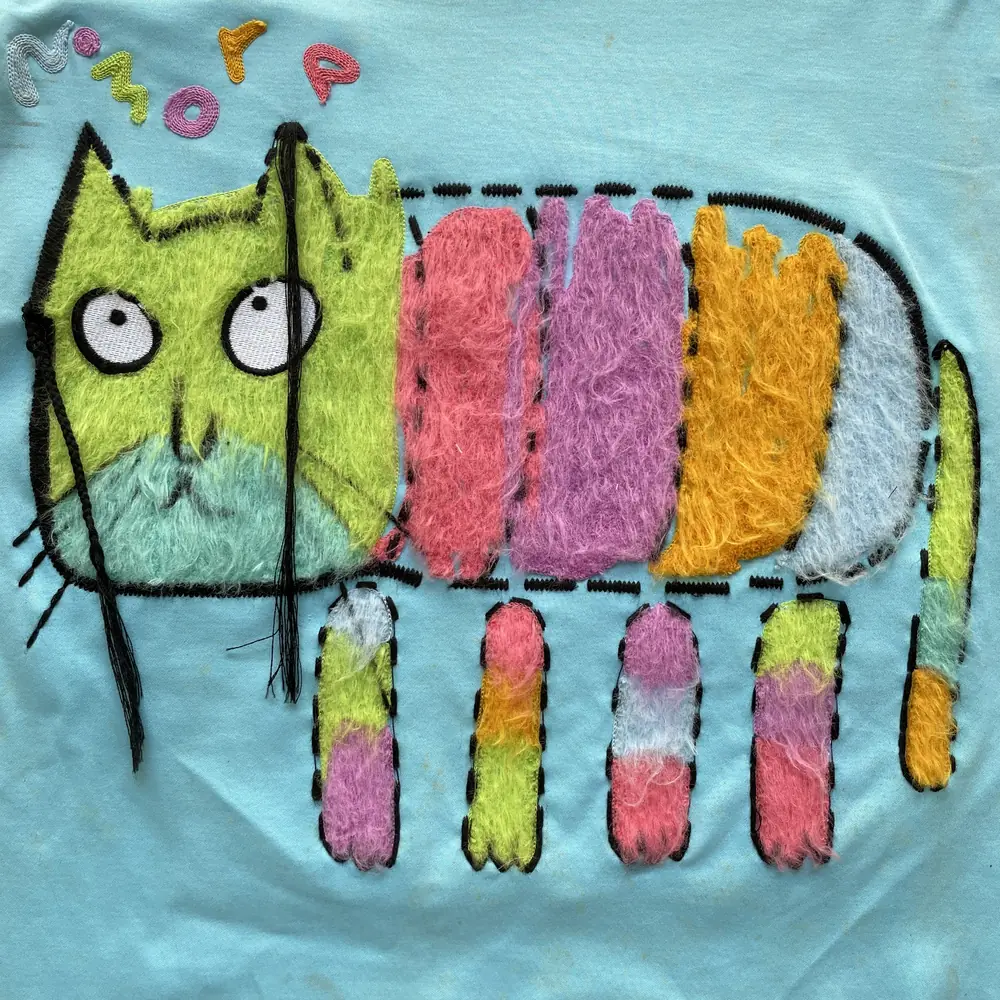
[Core Definition & Quick Selection] Needle-pile embroidery (brushed pile embroidery; also known as raised-pile embroidery, needle-pile raised pile, and brushed raised pile) is a fine pile embroidery formed by a brushing process that raises, lays, and shears the fibers of embroidery thread. It has a soft, warm hand feel like velvet or short-pile woolen fabric and is stitched with low-twist, high-bulk blended yarn or chenille yarn. Three simple samples are free; sampling takes 24–48 hours; bulk production takes 5–10 working days; MOQ starts at 300 pcs. Suitable for autumn/winter sweatshirts, kids’ cartoon apparel, home textiles, and plush fabric patch badges.
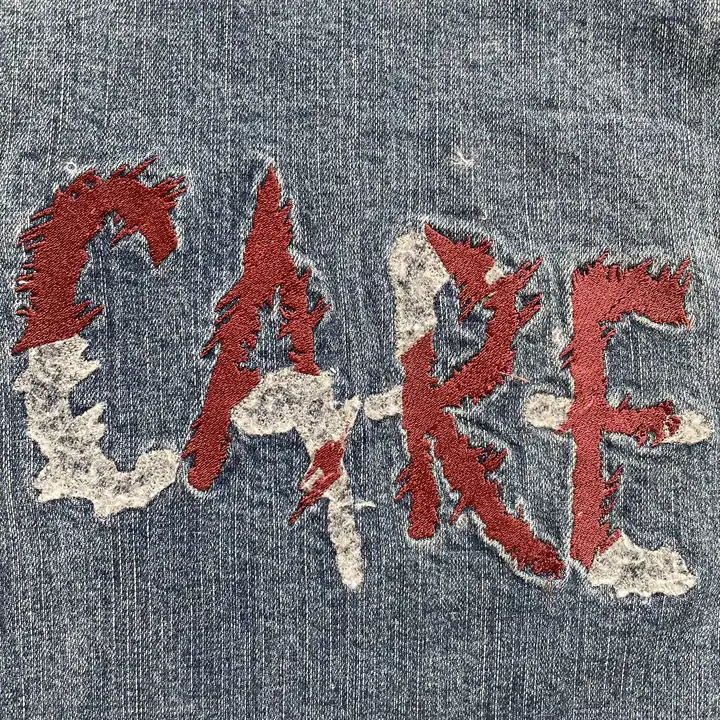
Needle-pile embroidery and brushed pile embroidery are a pile-surface embroidery technique that “brushes the thread into pile after stitching”: first, a pattern is embroidered with low-twist, high-bulk specialty yarn; then a roller with flexible curved needles passes over the embroidery surface, pulling up and laying down fibers from the embroidery thread one by one; finally, the pile is sheared flat and set, producing a soft, lofty pile surface like velvet or short-pile woolen fabric.
Its biggest difference from standard flat embroidery is this: flat embroidery displays “stitch lines,” while needle-pile brushed embroidery displays a “pile surface.” Flat embroidery calls for tight, flat stitching; brushed pile embroidery takes the opposite approach and requires enough brushing space to be reserved in the stitching so the later brushing roller has fibers to pull.
Standard flat embroidery makes the thread clean and flat, with every stitch visible; needle-pile brushed embroidery brushes the thread into pile after stitching, giving a full pile surface you can feel.
In apparel sourcing and export communication, there are several trade terms for the “brush pile after embroidery” process; we can respond to whichever term the customer uses:
| Industry Term | English Equivalent | Term Origin and Focus |
|---|---|---|
| Needle-pile embroidery | Needle-pile Embroidery | Emphasizes building a pile foundation with stitching first, then brushing to reveal the pile surface. |
| Brushed pile embroidery | Brushed Pile / Napped Embroidery | Emphasizes the brushing finishing step, in which a roller with flexible curved needles pulls and raises fibers from the embroidery thread. |
| Raised-pile embroidery / needle-pile raised pile / brushed raised pile | Raised-pile Embroidery | Named for the finished form, highlighting the three-dimensional pile surface with raised, upright fibers. |
| Velvet embroidery / plush relief embroidery | Chenille-stitch / Faux-fur Embroidery | Named for hand feel and appearance: warm and substantial like velvet or short-pile woolen fabric. |
Process boundaries to clarify:
The challenge in needle-pile brushed embroidery lies not in “stitching” but in “brushing.” Dobest independently modifies the electronic control and thread take-up mechanisms of specialized embroidery machines, refining machine thread tension to adjustable levels, and combines this with dedicated digitizing stitches to help make “brush after stitching” consistently achievable. The process has four steps:
Two critical factors:
| Process Control Parameter | Standard Capability Indicator | Design & Engineering Notes |
|---|---|---|
| Pile Height | Short pile approx. 1–2 mm; long pile approx. 3–6 mm | Light brushing produces a short-pile suede-like feel, while deeper brushing produces a long-pile plush feel, depending on the thread material and brushing parameters. |
| Width of a Single Brushed Line | Recommended ≥ 5.0 mm | If too fine, the fibers fluff and spread outward after brushing, distorting the outline. |
| Minimum Letter Height for English Letters | Recommended ≥ 8 mm | If letters are too small, pile edges tend to merge and outlines become unclear. |
| Suitable Threads | Low-twist, high-bulk blended yarn; wool-blend yarn; chenille yarn; cotton yarn | Filament polyester and rayon are continuous filaments and are not readily brushed into a pile. |
| Suitable Base Fabrics | Twill, denim, woolen fabric, heavy cotton, fleece, canvas | The risk of the base fabric itself being lifted by brushing should be assessed. |
| Maximum Design Area | Standard 300 mm × 300 mm | Suitable for front-chest, back and large-area pile designs. |
| Wash-Care and Durability Standard | Standard machine wash (laundry bag, water temperature ≤40°C); resists shedding after washing | Wash inside out and air-dry gently. |
Core Advantages (Pros):
Process Boundaries and Physical Limitations (Cons):
Common Garment Embroidery Placements and Recommended Sizes:
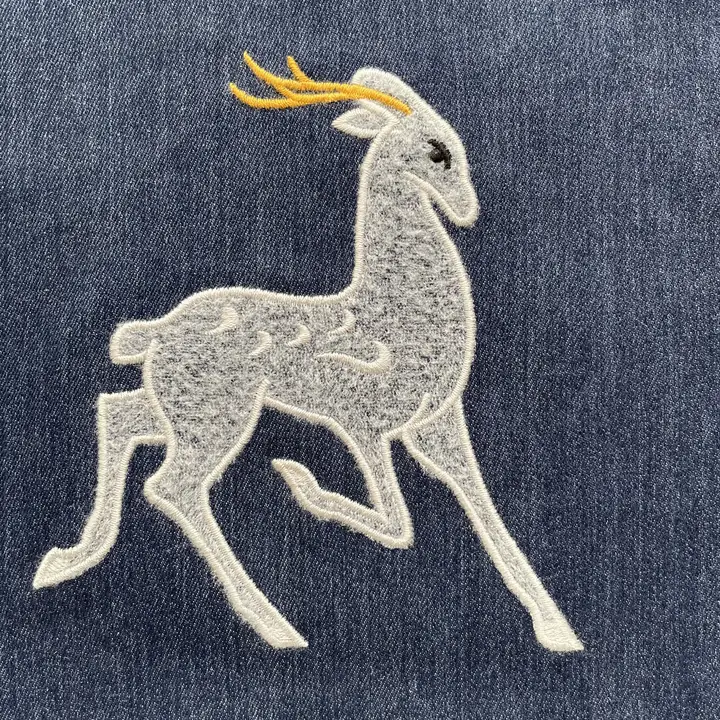
Recommended base fabrics: twill, vintage raw denim, woolen fabric, heavy cotton fleece, heavyweight sweatshirt fabric, canvas, blended knits and other fabrics with sufficient strength to withstand the friction and pulling force of brushing.
Needle-pile brushed embroidery can be used alone to create a pile surface or combined with other techniques, allowing multiple techniques in a single design:
| Process category | 3D form and texture | Hand feel | Minimum line width | Ideal style fit | Relative cost |
|---|---|---|---|---|---|
| Needle-pile brushed-pile embroidery | Lying, continuous pile surface; low to medium relief | Soft, lofty and warm to the touch | ≥5 mm recommended | Autumn/winter sweatshirts, kids' cartoon designs, home textiles | Relatively high (includes brushing, shearing and setting/finishing) |
| Toothbrush embroidery | Upright, distinct short pile; medium to high relief | Resilient and stands upright | Relatively small | 3D lettering, sports and streetwear brand badges | Medium |
| Chenille embroidery | Continuous loops; medium to high relief | Soft and lofty | Relatively small | Bathrobes, home textiles, sweatshirts | Medium |
| Electrostatic flocking | Flat-lying short flock; low relief | Flat, thin and dense | Depends on the screen stencil | Large solid-colour areas | Relatively low |
Q1 | Do needle-pile brushed-pile embroidery and toothbrush embroidery look alike?
Not really, though some customers do mix them up. Toothbrush embroidery has upright, distinct, separated short pile that feels resilient and stands up; brushed-pile embroidery has a continuous, lying, sheet-like pile surface, like velvet. One stands up in 3D, the other lies soft and flat.
Q2 | Will the pile shed? Does it come off easily after washing?
We remove loose fibres before shipment and verify fibre bonding with rub and tape tests, so shedding after washing is limited. Pile surfaces are relatively more prone to pilling in use — this is common to pile fabrics. We recommend washing inside out in a laundry bag on a gentle machine cycle and avoiding high-speed, high-heat drying.
Q3 | Does the colour change after brushing?
There is a slight change. Brushing alters how the thread reflects light, so the colour usually appears lighter and more matte. That is why sampling has to be checked on the physical piece rather than from a colour card or thread shade alone — we point this out in advance.
Q4 | Can any fabric be used, including thin garments?
Not every fabric is suitable. Brushing involves mechanical friction and tension, so the base fabric needs some strength; twill, denim, wool, heavy cotton, fleece and canvas are recommended. Fabrics that are too thin or too soft may be pulled up, pill or distort, so we suggest arranging a trial brush first and confirming with a physical sample before proceeding.
Q5 | Can small letters and fine lines be done?
Yes, but size needs to be controlled. A single brushed line is best kept at 5.0 mm or wider, and small English letters at 8 mm or taller; below that, pile edges merge and the outline becomes unclear. Please confirm with the pattern engineer at the design stage.
Dongguan Dobest Industrial Co., Ltd. (Dobest) was founded in 2013 and has focused on the research and manufacturing of specialty computerised embroidery for many years. We operate a 3000 ㎡ modern production workshop equipped with more than 30 specialty computerised embroidery machines. We have passed the Disney ILS and adidas SEA factory audits for international brands, and have received a Grade A taxpayer credit rating for four consecutive years. We support custom development from your drawings and samples, along with fast sampling.
Service hotline / WeChat: 13712297700 | Official website: dobest.hk | Submit a sampling request online
We cover the entire Pearl River Delta: on-site meetings are available in Dongguan, Shenzhen, Foshan (including Shunde), Zhongshan, Guangzhou, Zhuhai, Huizhou, Jiangmen and other cities. In Guangzhou this includes Haizhu, Liwan, Tianhe, Baiyun, Huangpu, Panyu, Huadu, Nansha, Conghua and Zengcheng; in Dongguan it includes Humen, Houjie, Chang'an, Dalang, Changping, Dalingshan, Shipai, Chashan, Tangxia, Liaobu, Dongcheng, Nancheng and Wanjiang. In most of these areas we can be on site to discuss samples within half a day.

Hotline / WeChat:
137-1229-7700 2/F, Bldg E, Jinmao Xincheng, No.7 Jiedong South Rd, Xiaojiejiao, Humen, Dongguan, Guangdong, China Phone: 0769-81517903
 mclau@dobest.hk
Hotline:
13712297700
0769-81517903