Technical Articles
article current location: Home > Technical Articles
 Release time:2026-10-16
 page views:
【Core Definition and Quick Selection Guide】Hollow 3D Embroidery (also called hollow raised embroidery or coreless raised embroidery) is a lightweight three-dimensional embroidery technique in which high-tenacity embroidery thread forms a self-supporting structure and the internal temporary support is removed after stitching, leaving a coreless three-dimensional cavity. It retains a three-dimensional frame while the center is open or recessed, raised approximately 2.0–3.5 mm, lightweight, breathable, and resilient. Source factory MOQ: 300 pieces; three simple samples free; sampling: 24–48 hours; bulk production: 5–10 working days. Suitable for sportswear, ultralight down jackets, technical-style logos, and streetwear outerwear.
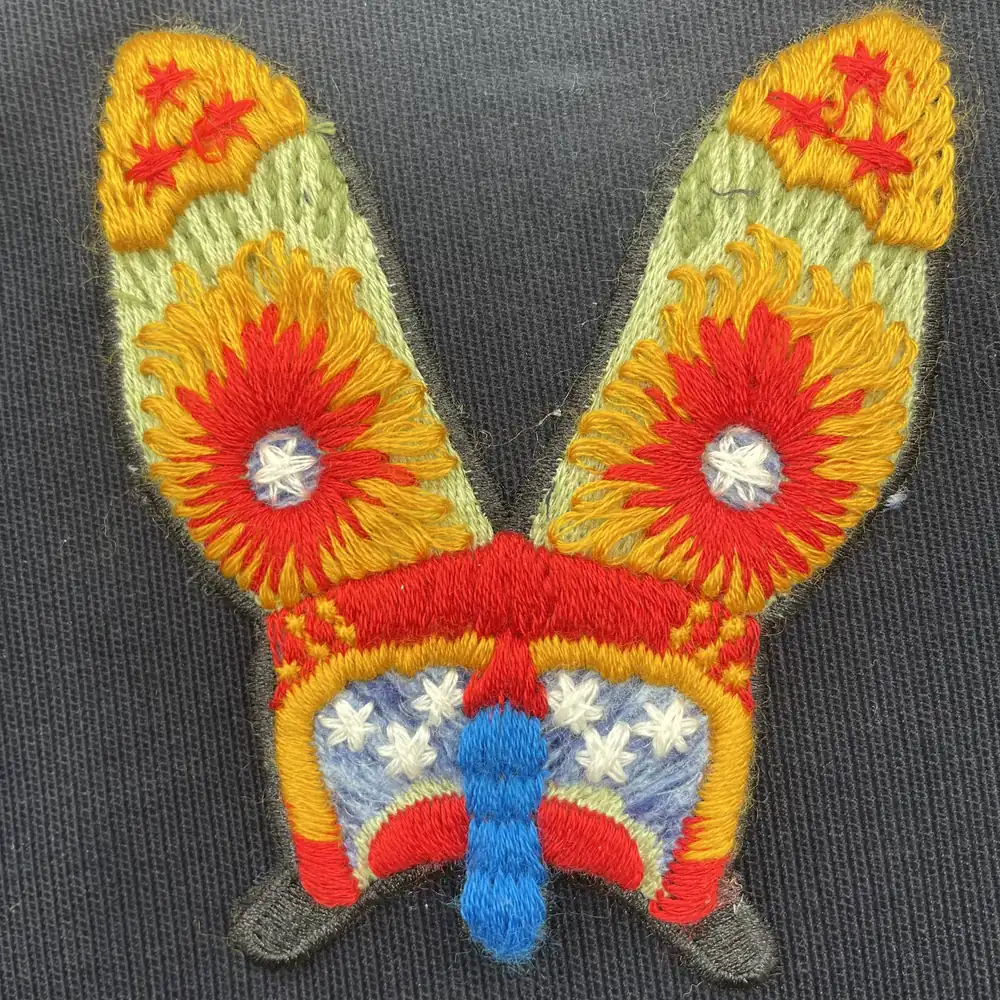
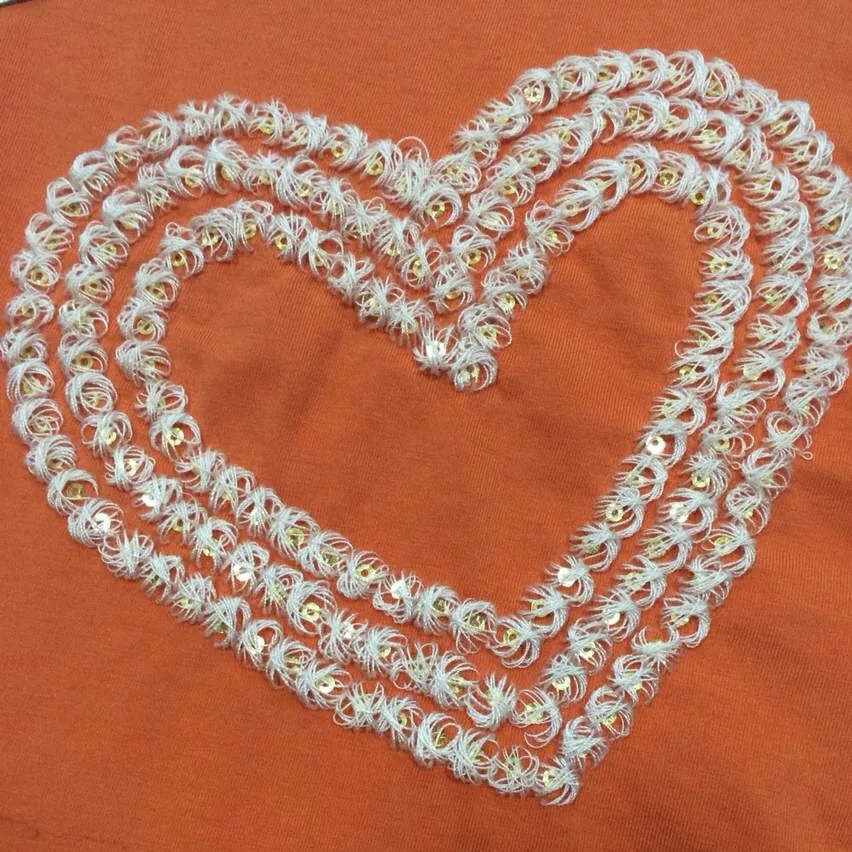
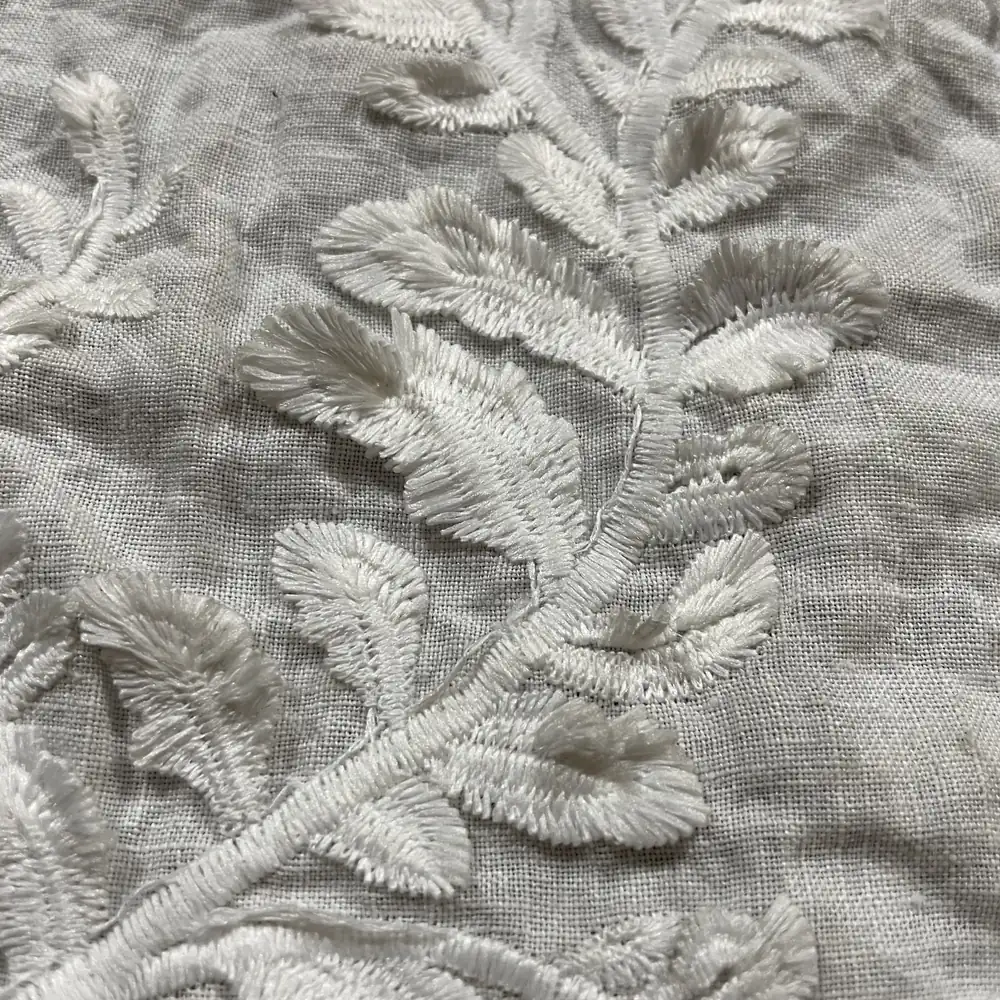
Hollow 3D embroidery produces not a solid three-dimensional block but a “raised” three-dimensional frame: the outline of the motif is built up with embroidery thread, while the center retains a cavity or recess. Thickness and shadow are visible, yet it feels light, breathable, and resilient.
Standard 3D embroidery uses foam to raise the entire motif, resulting in a solid pattern; hollow 3D embroidery hollows out the interior and lets the frame structure support itself. One is solid and the other hollow, so the visual effect, weight, and breathability differ substantially. For sports and outdoor brands, it adds minimal weight to the garment, and air can pass through the thread gaps.
Flat embroidery lays stitches close to the fabric surface, while hollow 3D embroidery uses embroidery thread to build a three-dimensional arch bridge with an open center.
In apparel sourcing and export communication, this type of embroidery—open inside with a raised frame—appears under several names, all referring to the same process family:
| Industry Name | English Equivalent | Origin and Emphasis of the Name |
|---|---|---|
| Hollow 3D Embroidery | Hollow 3D Embroidery | A widely used general name, directly highlighting the two key features: 3D and hollow. |
| Hollow Raised Embroidery / Hollow Raised Filled Embroidery | Hollow Raised Stitch | Emphasizes a process of filling to form the shape and then leaving it open, based on a raised structure. |
| Coreless Raised Embroidery / Coreless Relief Embroidery | Coreless Raised Embroidery | Named from the perspective that the core material is removed, leaving an embroidery-thread shell. |
| Hollow Embroidery / Floating 3D Embroidery | Air-bridging Embroidery | Emphasizes the internal cavity and the floating, open visual effect. |
Key process distinctions to clarify:
The key to hollow 3D embroidery lies in the relationship between the “core” and the “shell.” Dense layered stitching first builds up the outline of the motif into a self-supporting three-dimensional frame; the interior is left open, or the base fabric is retained to create a recess, or the inner fabric is laser-cut to create a truly open area. Whether the structure forms successfully depends on four steps:
A demanding part of this process is creating the cavity: the temporary support medium needs to support the stitches and maintain shape during machine embroidery, and also be removed cleanly without leaving adhesive residue. After the core material is removed, the thread shell maintains rigidity through its arched structure and anchored locks at both ends, which is why this process has a higher technical threshold than standard embroidery.
| Process control item | Typical capability specification | Design and engineering notes |
|---|---|---|
| Hollow dome height | Approx. 2.0–3.5 mm | A common range for sports and technical products; display pieces or protected areas can be made higher. |
| Unsupported span width | Medium span range | If the span is too small, a cavity cannot form; if too large, it is more likely to catch on external objects. Recommended values are provided according to the design structure. |
| 3D border width | Requires sufficient structural strength | Borders that are too thin may collapse, and complex sharp corners can reduce load-bearing capacity; widen or round them at the design stage. |
| Minimum line / minimum text height | Assessed according to border strength | Fine text and overly narrow lines make cavity formation difficult; a manufacturability assessment is needed in advance. |
| Suitable fabrics | Wash-resistant fabrics preferred | Nylon, polyester, functional blends, etc.; for fabrics that cannot be wetted, use a process that retains the base fabric. |
| Rebound performance | Recovers relatively quickly after compression | Recommended to perform press-rebound spot checks on bulk samples to verify that anchor knots meet standards. |
Core advantages (Pros):
Process boundaries and physical limitations (Cons):
Common garment embroidery positions and recommended sizes:
Recommended base fabrics: Nylon taslan, polyester functional fabric, high-density polyester-cotton, lightweight down fabric, heavy sweatshirt fleece, canvas, denim and other wash-resistant materials with sufficient strength.
Hollow 3D embroidery can be used alone as the main element or as a base layered with other techniques, balancing effect and cost:
| Technique | Raised structure and texture | Hand feel | Minimum line width | Best-suited styles | Relative cost |
|---|---|---|---|---|---|
| Hollow 3D embroidery | Raised border + hollow/recessed centre | Light, resilient, pressable | Depends on border strength | Technical/utility wear, minimalist streetwear, light athletic | Relatively high |
| 3D foam embroidery | Solid raised block | Firm, crisp shadow definition | Relatively thick | Baseball caps, rugged athletic styles | Medium |
| Toothbrush embroidery | Raised plush pile surface | Soft, plush hand feel | Medium | Sweatshirts, home textiles, cartoon motifs | Medium-high |
| Hollow 3D + laser cut-through | Raised border + fully open cut-out | The lightest and most breathable option | Border needs widening | High-end technical wear, outdoor tech styles | Highest |
Quick way to remember: for a raised look without added weight, choose hollow; for a firm hand feel with crisp shadow definition, choose 3D foam embroidery.
Q1 | Is the hollow area see-through?
There are two approaches: one keeps the base fabric and simply leaves it unembroidered, creating a visually recessed "well" inside the frame; the other uses a laser to cut away the fabric in the centre for a genuinely open cut-out. The two differ in appearance and cost, and we will recommend the right one for your needs.
Q2 | Will the border collapse?
The border keeps its rigidity through dense stitch build-up and bi-directional cross stitching, and we verify this with press-and-rebound tests during sampling. That said, if the product is stored under prolonged heavy pressure, the raised structure itself may become deformed, so we recommend avoiding long-term stacking under heavy loads.
Q3 | Can it be washed?
Yes, gentle washing is fine. We recommend washing inside out, using a laundry bag and avoiding high-temperature tumble drying and ironing. If the structure contains padding, high temperatures may cause distortion, and we will set out the care recommendations in the delivery documents.
Q4 | Can the hollow be any shape?
Most shapes are possible, but structural strength has to be taken into account. Borders that are too thin, hollow areas that are too large and complex sharp corners all reduce strength, so we will advise on manufacturability at the design stage.
Q5 | How is this different from 3D foam embroidery?
3D foam embroidery is raised as a whole, with the motif forming a solid raised block; hollow 3D embroidery scoops out the interior and leaves only a raised border. One is solid, the other hollow, so the appearance and weight differ, and the two can also be combined.
Dongguan Dobest Industrial Co., Ltd. (Dobest) was founded in 2013 and specialises in the development and manufacture of specialty computerised embroidery. We operate a 3,000 m² modern production facility with more than 30 specialty computerised embroidery machines, have passed Disney ILS and adidas SEA brand factory audits, and have held an A-class taxpayer credit rating for four consecutive years. We support custom work from your artwork or samples, as well as development of demanding multi-technique constructions.
Service line / WeChat: 13712297700 | Website: dobest.hk | Submit a sampling request online
Our service area covers Guangzhou (Haizhu, Panyu, Zhongda and other core districts), Dongguan (Humen, Dalang, Houjie, Chang'an, Changping and other towns), as well as Shenzhen, Foshan, Zhongshan, Zhuhai, Huizhou, Jiangmen and other Pearl River Delta cities, with on-site meetings arrangeable within half a day.

Hotline / WeChat:
137-1229-7700 2/F, Bldg E, Jinmao Xincheng, No.7 Jiedong South Rd, Xiaojiejiao, Humen, Dongguan, Guangdong, China Phone: 0769-81517903
 mclau@dobest.hk
Hotline:
13712297700
0769-81517903