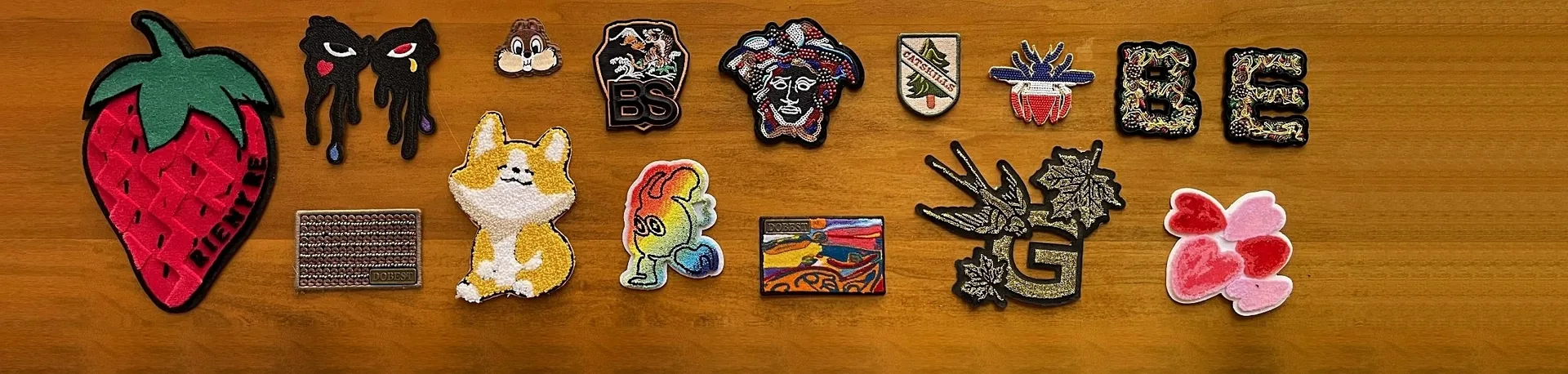
Technical Articles
article current location: Home > Technical Articles
 Release time:2026-10-15
 page views:
[Core Definition and Quick Selection Guide] Laser-cut embroidery (cutwork / eyelet / laser appliqué embroidery) is a breathable openwork embroidery process that deeply integrates high-precision CNC laser vector cutting with specialized computerized embroidery. Its core advantage lies in the "In-Frame Laser" technology, which precisely completes on-the-fly cutting and dense satin-stitch edge finishing in a single hoop clamping, with positioning error controlled within ±0.1 mm; cuts are clean and scorch-free, and edges resist fraying and unraveling after washing. It is widely used in sheer lace trims for womenswear hems, eyelet cutouts on shirt collars, breathable perforations on shoe uppers and bags, and leather appliqué for streetwear. The Dobest source factory in Dongguan is equipped with more than 30 industrial laser cutting machines and computerized embroidery machines; standard MOQ starts at 300 pieces; free sampling for up to 3 simple designs; sampling takes 24–48 hours; bulk production takes 5–10 business days; R&D and custom development are supported based on drawings and samples.
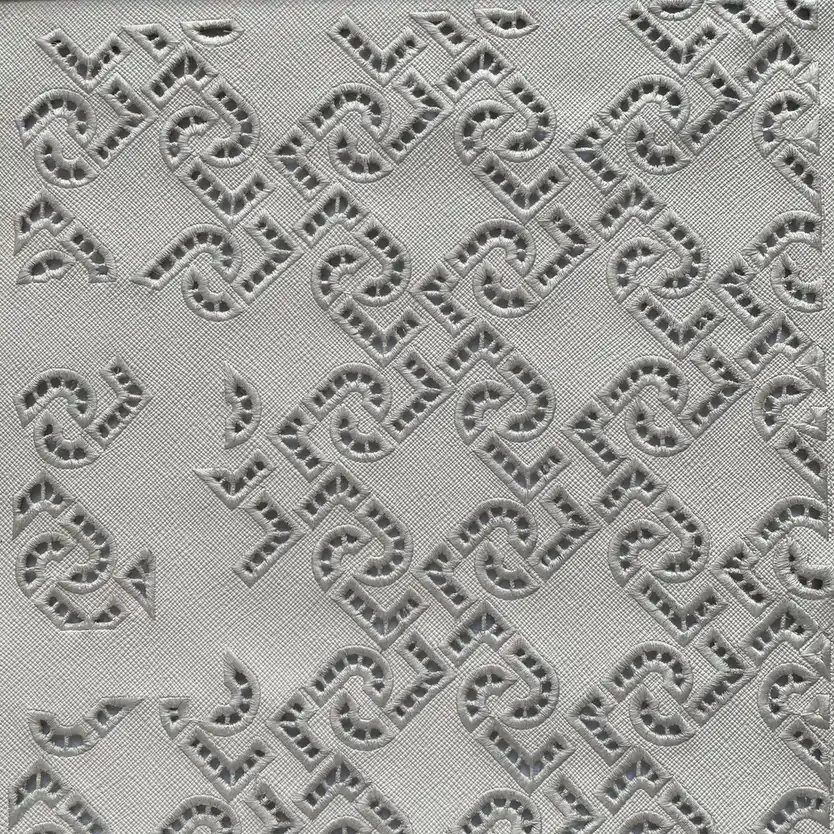
If you need to explain laser-cut openwork embroidery to buyers and designers in one sentence: "Laser-cut embroidery gives embroidery a breathable, openwork quality—CNC lasers cut local openwork areas in the fabric, and dense embroidery threads firmly seal the contours, allowing light and breeze to pass through the pattern."
Laser cutwork is not merely a surface decoration; it combines two practical functions: a visually light, sheer aesthetic and physical air circulation and breathability. In spring/summer womenswear and wedding gowns, it presents light, delicate lace layers; on sneaker uppers, hats, and bag panels, it serves as high-strength functional ventilation openings, making it a hybrid embroidery process with strong industrial utility.
In apparel export sourcing, brand pattern development, and production coordination, different regions emphasize different aspects of this process. Common names and core concepts are distinguished as follows:
| Language / Field | Standard Term | Common Industry Aliases and Related Terms | Process Focus and Characteristics |
|---|---|---|---|
| Simplified Chinese | Laser-cut embroidery / cutwork embroidery | Laser cutwork embroidery, eyelet embroidery, laser appliqué embroidery, openwork embroidery | Umbrella term covering laser vector cutting, irregular openwork, and multi-layer appliqué embroidery |
| Traditional Chinese | Laser embroidery / cutwork embroidery | Laser cutwork embroidery trim, eyelet embroidery, laser appliqué embroidery | Common term in Hong Kong, Macau, and overseas Chinese-language markets; often used for couture gowns and ready-to-wear |
| English (Export Standard) | Laser-cut Embroidery | Cutwork Embroidery, Eyelet, Laser Appliqué, Broderie Anglaise | Frequently used sourcing term among international apparel buyers, covering laser cutting and embroidered appliqué |
In-Depth Industry Terminology Distinctions:
In actual production, the Dobest factory mainly adopts two core technical routes based on pattern complexity and fabric characteristics:
After the fabric is positioned and clamped in the embroidery frame, the program runs automatically in a linked sequence: first, a positioning run stitch secures the fabric and backing → the laser head performs instant on-the-fly cutting along the set contour to cut away excess fabric → pneumatic air blow removes waste debris → special embroidery needles apply full satin stitch or edge-finishing stitches to securely encase the cut-edge fray within the embroidery threads. This route offers high precision, with tolerance under 0.1 mm, and a tight production cycle.
For styles that require openwork embroidery threads to be built over suspended holes, water-soluble backing or hot-melt film is used as a temporary physical support medium. After the laser cuts through the base fabric, the embroidery needle uses the water-soluble film to create mesh or floral connecting bridges in the air; in the finishing stage, the water-soluble film is dissolved in room-temperature water, leaving true three-dimensional suspended lines and an ethereal artistic effect.
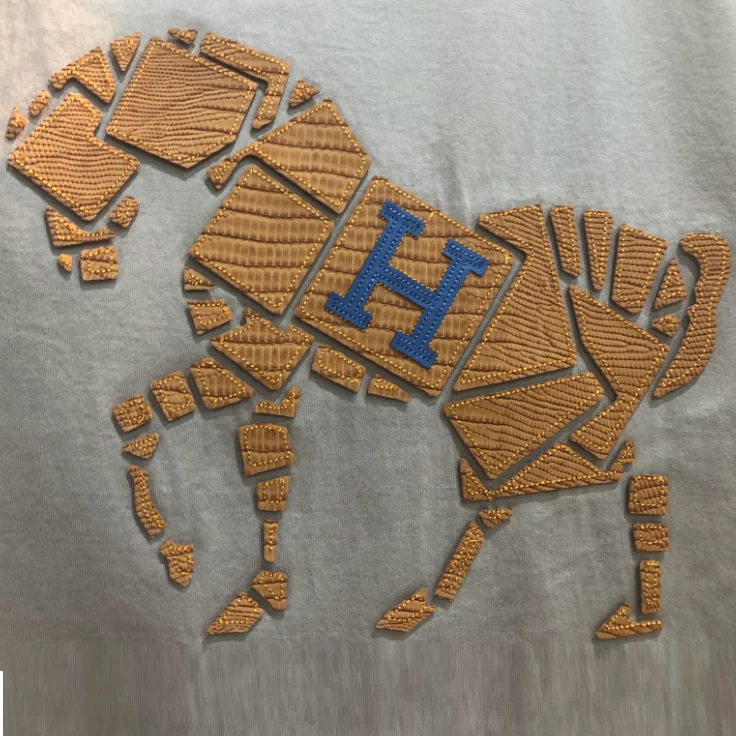
To help brand designers with precise pattern development and procurement cost verification, the Dobest factory has summarized the core industrial parameter standards for laser cutwork embroidery as follows:
| Processing parameter | General capability range | Recommended standard range | Technical notes and process boundaries |
|---|---|---|---|
| Positioning and cutting accuracy | ±0.05 mm – ±0.2 mm | Within ±0.1 mm | CNC laser servo positioning control; cuts are clean and rounded without jagged edges |
| Minimum cutout inner diameter | ≥ 1.0 mm | ≥ 1.5 – 2.0 mm | Below 1.0 mm, heat buildup is more likely; for breathable micro-holes, set 1.5 mm or above |
| Safe bridge width between adjacent holes | ≥ 1.2 mm | ≥ 1.5 – 2.0 mm | Bridges that are too narrow may break during subsequent washing and pulling; allow a safe fabric bridge |
| Outer-edge dense-stitch binding width | 1.5 mm – 5.0 mm | 2.5 – 3.5 mm | For natural-fiber fabrics, an edge binding of ≥2.5 mm is recommended to help wrap the cut edge securely and reduce fraying |
| Maximum single-panel processing width | 1200 mm × 800 mm | Large-area continuous splicing | Supports large-format continuous-piece embroidery, positioned embroidery on cut panels, and garment-panel processing |
| Suitable fabric thickness range | 0.1 mm – 4.0 mm | 0.3 – 2.5 mm | From lightweight silk chiffon and lace mesh to heavier velvet, denim and faux leather |
Compared with printed openwork or hand-cut openwork, modern laser-cut embroidery offers three distinctive quality advantages:
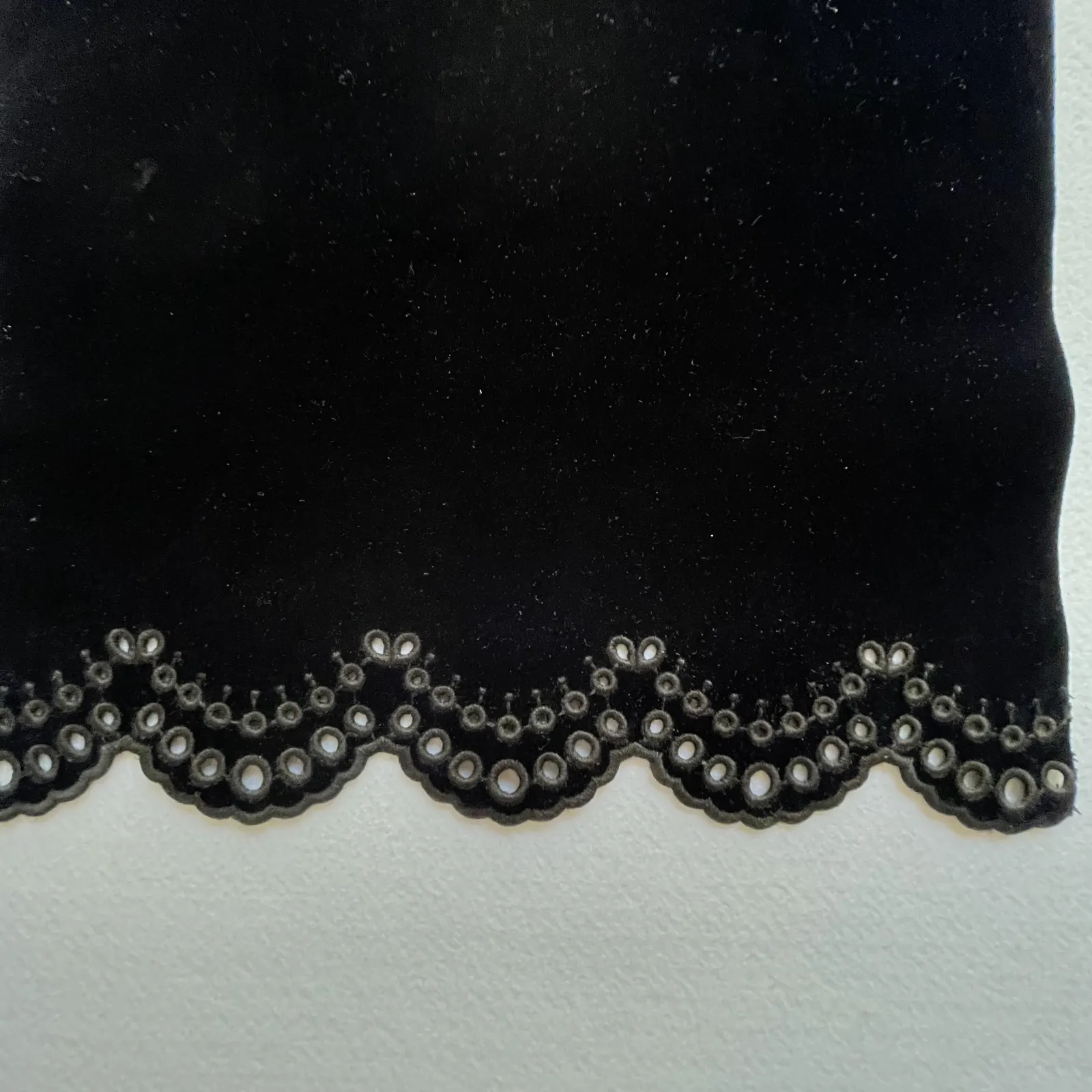
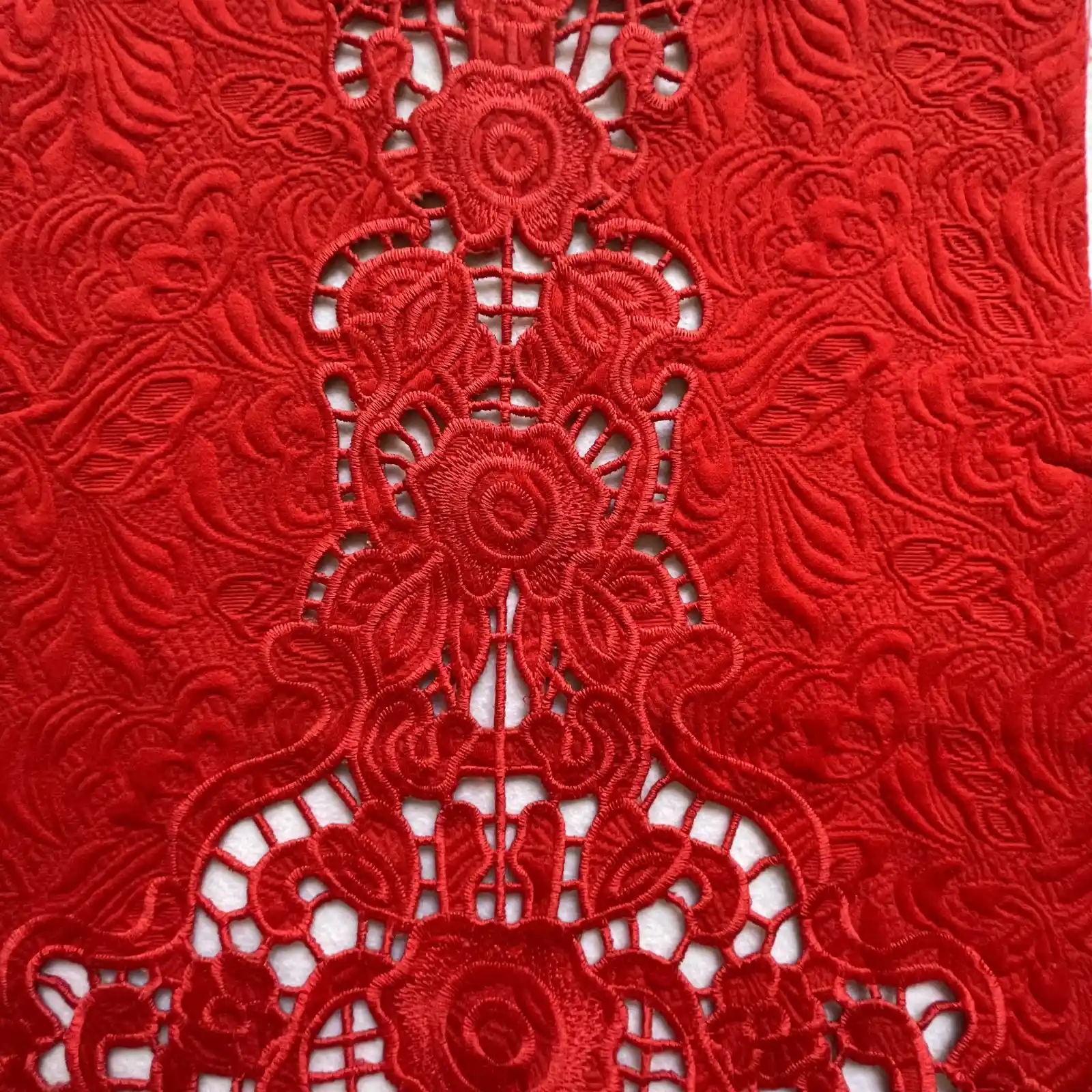
For different apparel styles and functional requirements, common openwork and appliqué techniques are compared side by side below:
| Process Type | Openwork / Appliqué Principle | Cut-Edge Smoothness | Shape Complexity Freedom | Hand Feel and Style Characteristics | Relative Processing Cost |
|---|---|---|---|---|---|
| Laser-Cut Openwork Embroidery (In-Frame) | CNC laser vector vaporization cutting + dense-stitch edge locking | ★★★★★ (smooth with no frayed edges; self-locking fused edge) | ★★★★★ (arbitrary complex irregular geometries) | Smooth and conforming, airy and lightweight, with dimensional layering | Medium (stable and cost-effective in volume production) |
| Traditional Die-Punched Eyelet Embroidery | Physical die punching + embroidered edging | ★★★☆☆ (limited by blade sharpness) | ★★☆☆☆ (limited to fixed-spec round/oval holes) | Rustic and classic, traditional English pastoral style | Medium (requires a physical punching die) |
| Water-Soluble Lace Embroidery (Guipure) | Full-stitch embroidery on water-soluble backing, with no base fabric | ★★★★☆ (no cut edges; pure thread network) | ★★★★☆ (mainly interlocking floral and leaf motifs) | Fully openwork with a suspended look; slightly stiff hand feel requiring shaping | Relatively high (very high thread consumption, post-process washing) |
| Traditional Hand-Cut Appliqué Embroidery | Manual scissor trimming of excess fabric edges + edge locking | ★★☆☆☆ (may leave tiny frayed edges) | ★★★☆☆ (depends on worker scissor skill) | Thick and vintage; prone to alignment tolerance issues | High (high labor cost, low consistency) |
The business cooperation standards of Dobest source factory are as follows:
Q1 | Will the edges of laser-cut openwork unravel or fray after washing?
There is no need for concern. Synthetic and blended fabrics form a micron-level anti-fray fused edge at the moment of laser cutting; for natural cotton and linen fabrics, we apply high-density edging stitches at least 2.5mm wide during pattern-making, locking the cut edge within the embroidery outline, so normal washing is unlikely to cause fraying or unraveling.
Q2 | Will laser cutting scorch or yellow fabric edges, or leave a burnt smell?
No. Dobest uses high-precision CNC micro-focus pulsed lasers with a high-pressure air-cooling assist system during cutting, resulting in a very narrow heat-affected zone. The fabric vaporizes rapidly within microseconds, leaving clean, smooth cut edges without scorch marks; after non-hazardous odor-removal finishing, the finished product is fresh and odor-free.
Q3 | Can we send our own special fabrics or leather directly to you for laser embroidery processing?
Fully supported. We regularly process customer-supplied materials (including genuine leather, PU synthetic leather, specialty coated fabrics, silk chiffon, and denim cut panels). Before sampling, we recommend sending a 1–2 meter fabric sample so we can test laser power and stitch tension with trial cuts, confirm cut-edge smoothness and hand feel, and then proceed with formal pattern development.
Q4 | How should laser-cut openwork embroidered garments be washed and cared for in daily use?
We recommend turning the garment inside out and placing it in a laundry bag; machine wash gently at 30–40°C or hand wash. Avoid washing it together with garments that have sharp metal zippers or hard hook-and-loop fasteners. Avoid high-temperature strong tumble drying and high-temperature pressing over openwork holes. Simply hang it in the shade to dry naturally to help maintain a flat, crisp shape over time.
Q5 | How much cost can customers save with an integrated embroidery-and-cutting process on the same machine compared with outsourced laser cutting?
This saves the transfer and transport time between the two factories and the labor hours for secondary positioning at the outsourced factory, shortening overall lead time by about 30%. More importantly, a single setup significantly reduces the risk of mis-cut scrap and helps brands reduce reject losses on high-value cut panels.
Dongguan Dobest Industrial Co., Ltd. (Dobest) — founded in 2013, specializing in computerized embroidery processing and custom specialty embroidery. Our core processes are laser-cut embroidery, toothbrush embroidery and chenille embroidery. We are equipped with more than 30 specialty computerized embroidery machines (including industrial laser cutting machines and cutting machines), with an annual production capacity of 1.5 million pieces. We support on-site consultation and rapid sampling.
Phone/WeChat: 13712297700 | Official website: dobest.hk | Online inquiry and sampling
We can visit customers in Pearl River Delta cities such as Dongguan, Shenzhen, Foshan (including Shunde), Zhongshan, Guangzhou, Zhuhai, Huizhou and Jiangmen; for Guangzhou urban areas and surrounding districts (Haizhu, Liwan, Tianhe, Baiyun, Huangpu, Panyu, Huadu, Nansha, Conghua and Zengcheng) and local Dongguan towns and subdistricts (Humen, Houjie, Chang'an, Dalang, Changping, Dalingshan, Shipai, Chashan, Tangxia, Liaobu, Dongcheng, Nancheng, Wanjiang, etc.), we can usually visit within half a day.
For sampling inquiries, we recommend sending: ① vector design artwork (AI/DXF/PDF) ② intended fabric material ③ whether appliqué or suspended bridging is required ④ estimated quantity and delivery schedule — when all four are provided, technical evaluation and sampling will be more efficient.

Hotline / WeChat:
137-1229-7700 2/F, Bldg E, Jinmao Xincheng, No.7 Jiedong South Rd, Xiaojiejiao, Humen, Dongguan, Guangdong, China Phone: 0769-81517903
 mclau@dobest.hk
Hotline:
13712297700
0769-81517903