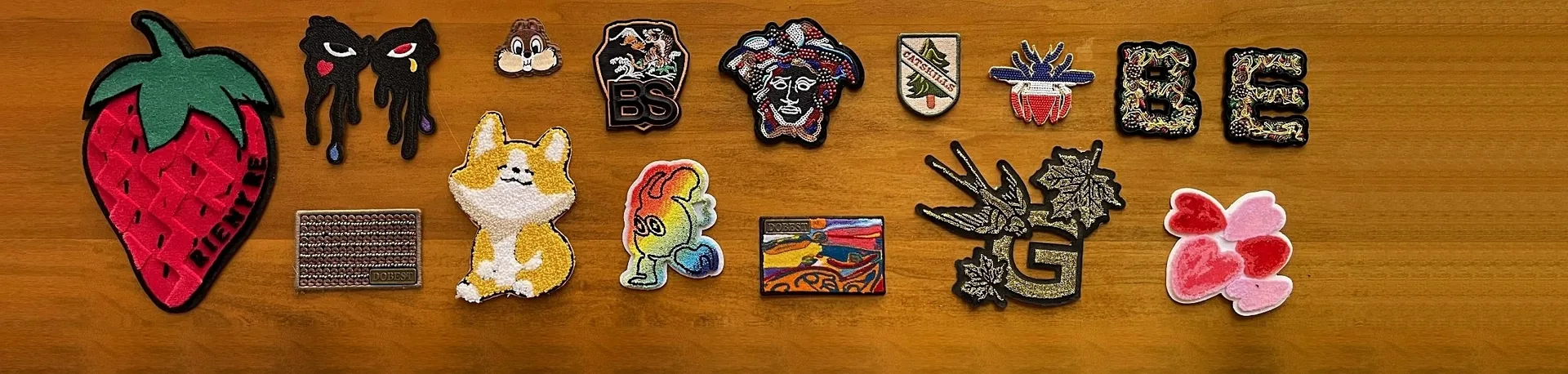
Technical Articles
article current location: Home > Technical Articles
 Release time:2026-10-05
 page views:
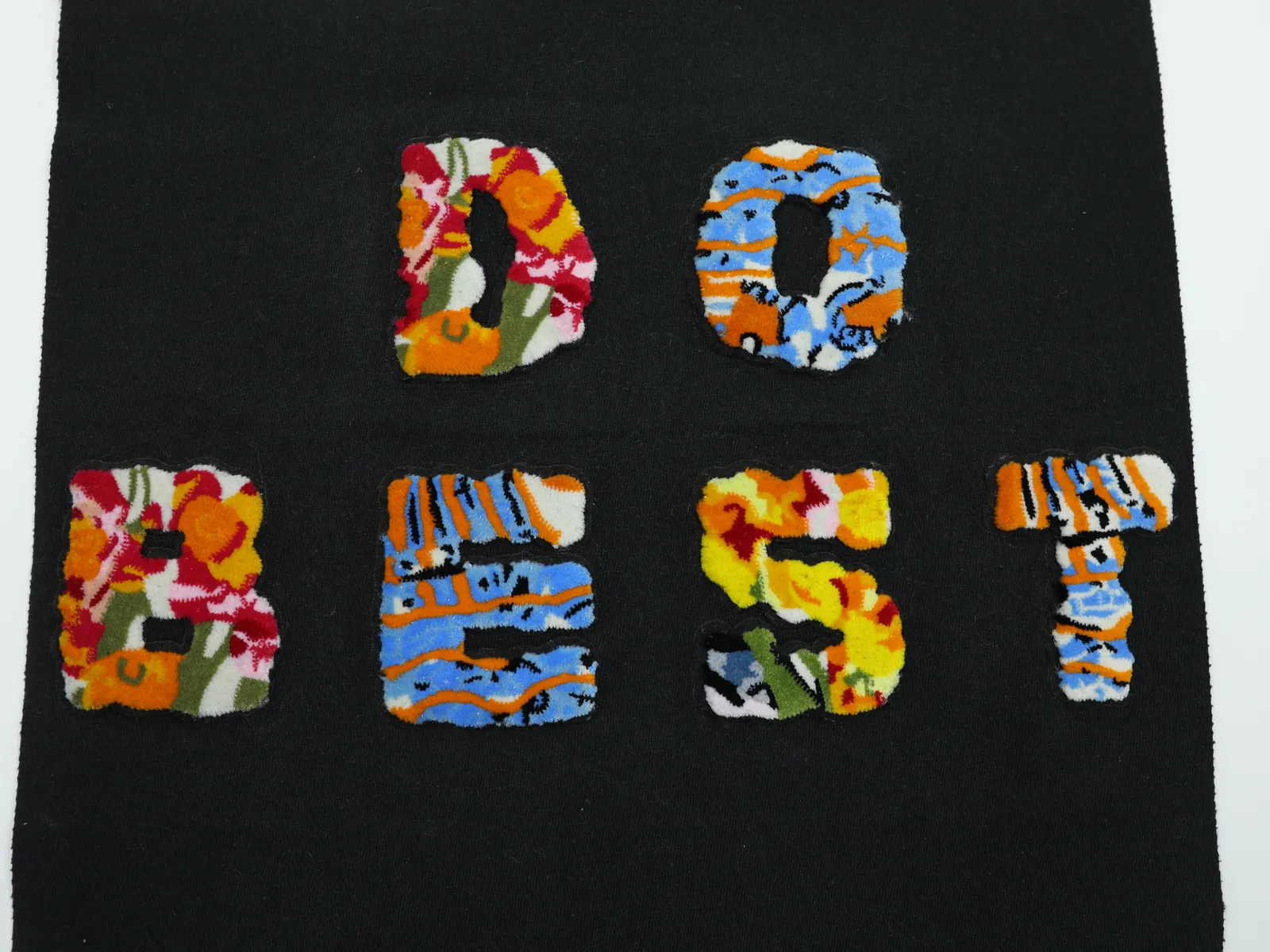
Toothbrush embroidery is a 3D embroidery in which the thread stands up into columns; it is also called vertical pile embroidery, bristle embroidery, turf embroidery, tufting embroidery or flocking embroidery. Standard pile height 1.0–10.0 mm, commonly 2.0–3.5 mm; the thread passes through the fabric on a single side and is heat-locked with TPU, so it resists shedding after washing. MOQ 300 pieces, sampling in 24–48 hours; suited to hoodies, caps, bags, woven labels and kidswear.
Toothbrush embroidery is a 3D embroidery that makes the thread stand up: the yarn rises vertically from the fabric like toothbrush bristles, it can be felt and springs back, and it gives a clear outline from a distance and a pile surface up close — hence it is also called vertical pile embroidery.
Now widely adopted by high-end fashion and sports and streetwear brands, it is a prominent embroidery technique on hoodies, baseball caps, jackets, bags, woven labels and badges.
The difference from ordinary embroidery can be explained to a customer in one line:
Ordinary embroidery lies flat on the fabric; toothbrush embroidery stands on it.
On the market this technique goes by several names, and customers search using different words:
| Name | Explanation |
|---|---|
| Toothbrush embroidery | A common name, from the toothbrush-bristle effect |
| Vertical Pile embroidery | A more technical name, emphasising that the thread stands upright |
| Flocking embroidery | Used loosely in the trade; many customers search this term directly |
| Turf embroidery | From the turf-like surface; common in streetwear circles |
| Tufting embroidery | More common in English usage and in home textiles and carpets |
Three easy confusions to clear up:
Toothbrush embroidery ≠ electrostatic flocking.
Electrostatic flocking (flock printing) is a printing and surface-treatment process — glue is screen-printed onto the fabric and then hundreds of thousands of volts of static electricity fire short fibres vertically into the adhesive layer. It belongs to flock printing, not embroidery. Both leave an upright pile on the surface, which is why non-specialists confuse them, but the methods, equipment, costs and durability logic are completely different: flocking relies on glue, while we rely on the thread passing through the fabric with heat-locked roots at the back.
Toothbrush embroidery ≠ chenille embroidery.
Chenille embroidery uses a chenille head to form loops of thread, like the little loops in towelling; those loops are ring-shaped and lie flat. Toothbrush embroidery cuts the pile columns and leaves them standing. The two are often combined (see section 7).
Toothbrush embroidery ≠ 3D puff (foam) embroidery.
3D puff embroidery places EVA foam underneath and covers it with dense satin stitching, so the relief is solid and firm; the relief of toothbrush embroidery is soft and furry.
What a customer usually wants is “a dimensional, furry, touchable embroidered effect”. So we ask about the application and the hand-feel preference first, then help you decide: soft pile → toothbrush embroidery; loops → chenille embroidery; crisp hard edges → 3D puff embroidery; a flat flocking graphic in volume at low cost → that is where electrostatic flock printing comes in.
Embroidery thread is soft by nature, and there are three common technical routes to make it stand up:
Our production flow (simplified, without internal process parameters):
Why does “root locking” deserve this much attention? Because the quality difference in toothbrush embroidery — whether it sheds — comes almost entirely down to how well the roots are locked. Some low-cost approaches only pinch the thread with face stitching and never lock the roots as a whole, so after a few washes or rubs they fuzz and shed in patches. Our method welds the whole set of thread roots from the reverse, which is where our confidence in keeping the pile stable comes from.
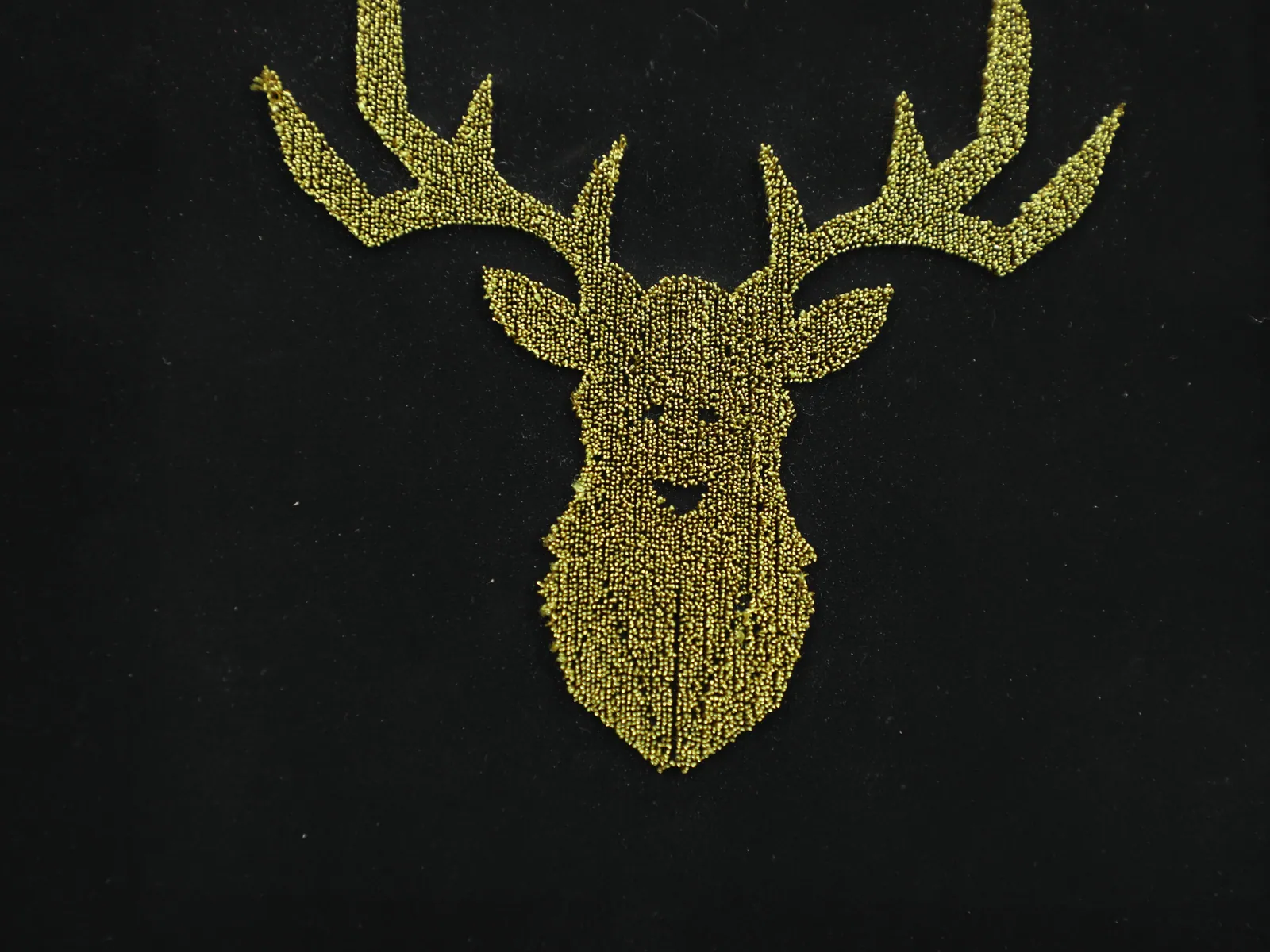
| Item | Specification |
|---|---|
| Pile height (column height) | 1.0–10.0 mm, commonly 2.0–3.5 mm |
| Height variation | Different heights can be set within one design, roughly 1.0–1.5 mm of variation (a sculpted layering) |
| Common yarns | 120D/2 and 150D/2 polyester; rayon for high-gloss effects |
| Minimum line width | Suggested ≥ 2.5–3.0 mm (a single line below about 1.5 mm will scatter and blur after shearing) |
| Minimum spacing between letters | ≥ 2.0 mm |
| Minimum letter height | about ≥ 10 mm |
| Single embroidery field | about 1200 × 800 mm (larger by joining fields) |
| Stitch density | adjustable at the 0.08 mm level for fine expression of artwork |
| Washing and durability | day to day we recommend washing inside out below 40℃ in a laundry bag, and avoiding high-temperature drying and ironing |
Note: the above are standard capability ranges; the actual result is confirmed by sampling — the feasible range varies with fabric, artwork and washing requirements, so we sample first and only then discuss production.
Positioning: youthful, sporty and casual, and also warm and skin-friendly because the pile is soft — well suited to streetwear, sportswear, kidswear, home textiles and brand badges.
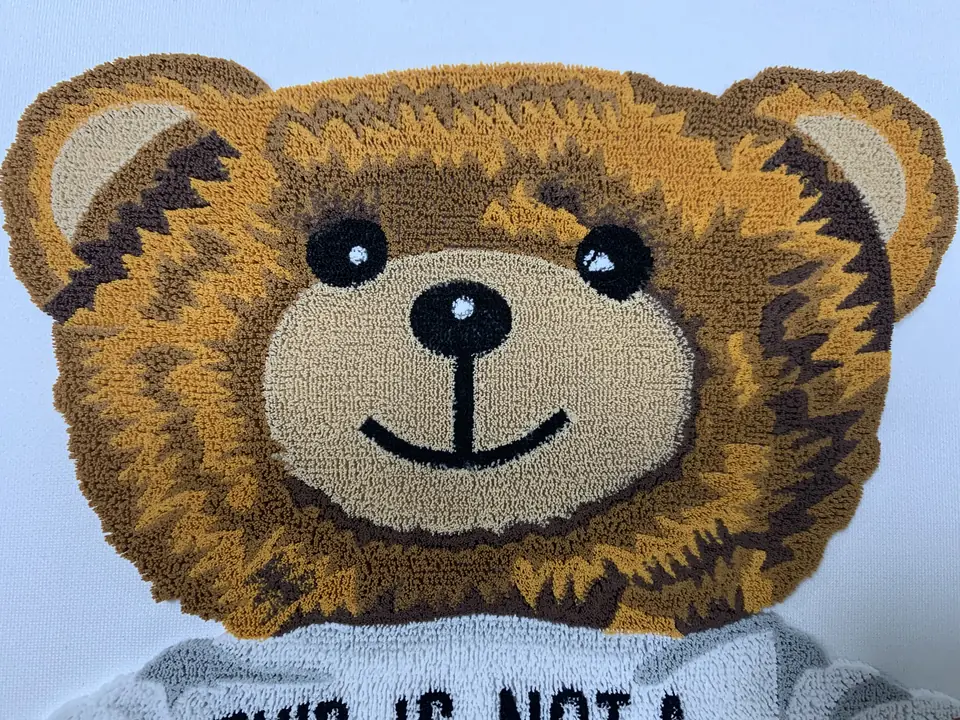
Good performance: hoodie fleece, loop-back fleece, brushed and polar fleece, canvas, denim and cotton — woven and knitted fabrics of moderate weight; the stiffened front panel of a baseball cap is a typical substrate.
Possible with care: ordinary knit and thin cotton. On thin materials we recommend hook-and-loop fabric labels or heat-transfer embroidered patches — make the embroidered piece first, then apply heat transfer or hook-and-loop, avoiding large areas of pile formed directly on thin fabric, which distorts.
Handle with caution (must be discussed before ordering): highly elastic knits (require greater bobbin pre-tension, a slightly adjusted presser-foot height, or our backing-free route instead), silk-like thin materials, and fabrics with a waterproof coating or silicone finish (these affect lamination adhesion and must be adhesion-tested first).
Good product fits: hoodies, jackets, baseball uniforms, hats, bags, woven labels, brand badges, kidswear, sports and casual ranges and home textiles. See the toothbrush embroidery section for styles and case studies.
Not suitable — and we will say so up front: lettering with extremely fine strokes; large areas on ultra-thin fabric; areas of long-term, high-frequency friction (inside cuffs, crotch, pocket edges); and applications that must be completely flat and thin.
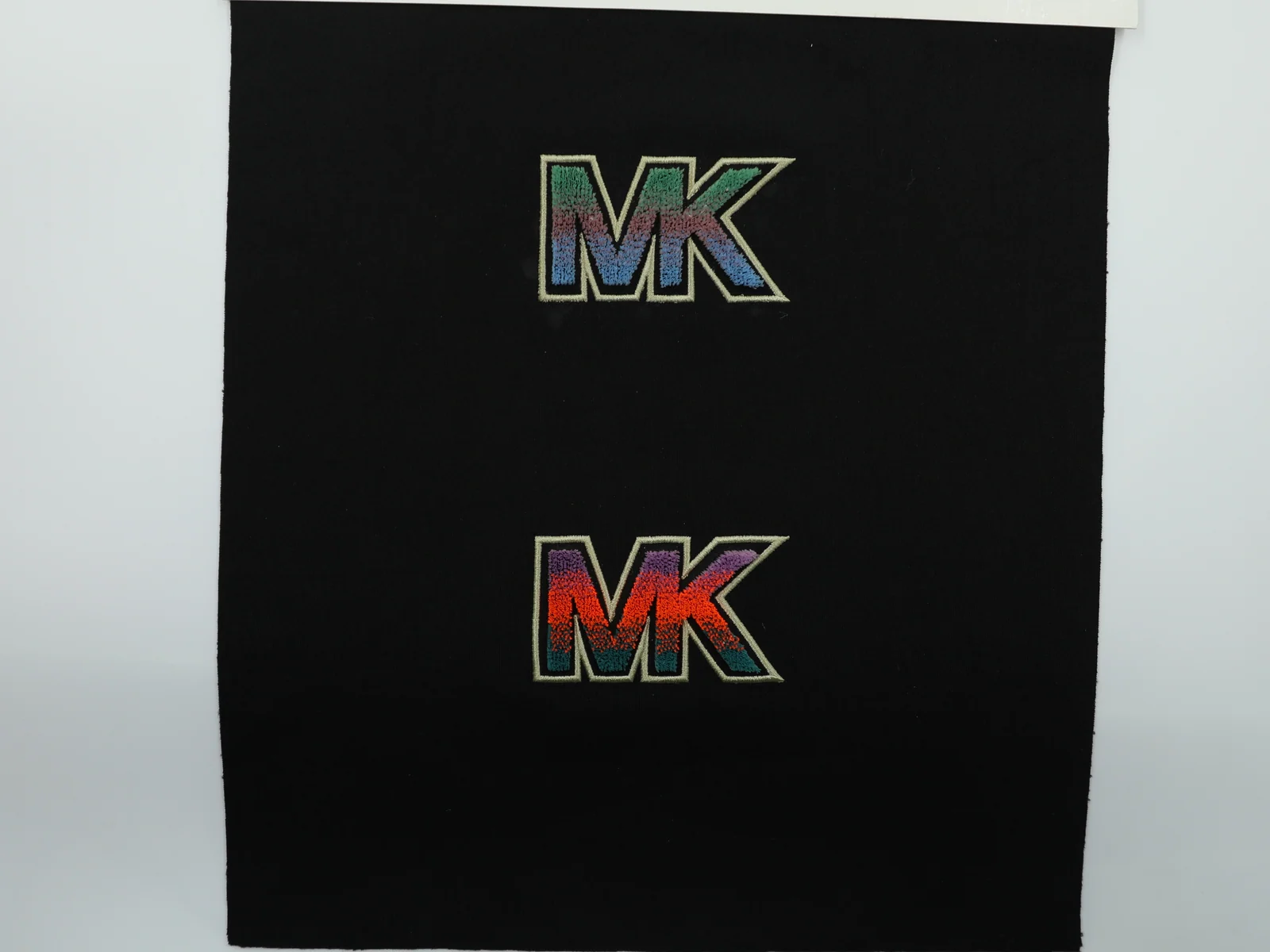
One of toothbrush embroidery's key strengths is that it can sit in the same artwork as other techniques to create layering and texture:
| Technique | Form | Hand feel | Minimum stroke | Typical applications | Cost |
|---|---|---|---|---|---|
| Toothbrush | upright columns, dimensional pile | soft, furry, resilient | about ≥ 2.5–3.0 mm | hoodies / caps / bags / labels / kidswear | medium-high |
| Chenille | loops (ring-shaped) | soft, with a loop feel | about ≥ 4.0 mm | lettering, kidswear, home textiles | medium |
| 3D puff | firm raised relief, crisp outline | solid, stiff, powerful | about ≥ 4.0–6.0 mm | cap badges, sportswear, firm logos | high |
| Electrostatic flocking (printing) | a layer of upright flock on the surface | furry, matt, but glue-based | thick lines only | large flat graphics, packaging, interiors | low |
| Ordinary flat | flat | smooth, thin | fine letters possible | fine letters, small graphics, large areas | low |
In one line: soft and dimensional → toothbrush; loops → chenille; crisp and hard → 3D puff; flat, large area, low cost → flock printing or flat embroidery.
Q1 | Are toothbrush, flocking and electrostatic flocking the same thing?
No. Toothbrush embroidery (also called vertical pile embroidery) makes the embroidery thread stand up into columns; electrostatic flocking is a printing and surface-treatment process that glues short fibres onto adhesive with static electricity, and belongs to flock printing, not embroidery; flocking embroidery is a loose trade term for “embroidery with a pile surface”, and many customers searching that word actually want a dimensional pile embroidery effect — we judge by your real requirement which method to use.
Q2 | Will it shed? Can it be washed?
Our method heat-locks the root of every thread from the back, so it resists coming loose in normal wear and washing. day to day we recommend washing inside out below 40℃ in a laundry bag and avoiding high-temperature drying and ironing.
Q3 | How fine can it go? Can it do small letters?
A single stroke should be ≥ 2.5–3.0 mm, spacing between letters ≥ 2.0 mm, and letter height about ≥ 10 mm. Below that it blurs and scatters and we do not recommend forcing it — such fine-line requirements are better served by flat embroidery.
Q4 | How high can the pile go?
Normally 1.0–10.0 mm, and commonly 2.0–3.5 mm. The higher the pile, the harder the trimming and the greater the washing risk, so we advise by product use (for caps, for example, around 3 mm usually sits well).
Q5 | How are MOQ and sampling arranged?
MOQ 300 pieces; up to 3 simple samples free, complex samples charged and deductible against the order once the MOQ is reached; sampling normally 24–48 hours, and 3–4 working days for complex combined techniques. The more complete your materials (vector file, AI, PDF or high-resolution image), the faster the sample.
Dongguan Dobest Industrial Co., Ltd. (Dobest) — founded in 2013, dedicated to computerised embroidery processing and special embroidery customisation, with toothbrush and chenille embroidery as its main focus, 30+ specialised computerised embroidery machines (including 15 dedicated toothbrush-embroidery machines) and an annual capacity of 1.5 million pieces. We support on-site meetings and fast sampling.
Phone / WeChat: 13712297700 | Website: dobest.hk | Enquire and request a sample online
We can meet customers on site in Dongguan, Shenzhen, Foshan (including Shunde), Zhongshan, Guangzhou, Zhuhai, Huizhou and Jiangmen; in Guangzhou city and its surroundings (Haizhu, Liwan, Tianhe, Baiyun, Huangpu, Panyu, Huadu, Nansha, Conghua, Zengcheng) and in Dongguan itself (Humen, Houjie, Chang'an, Dalang, Changping, Dalingshan, Shipai, Chashan, Tangxia, Liaobu, Dongcheng, Nancheng, Wanjiang and other towns), we can usually arrive within half a day.
For a sampling enquiry, please send: ① the artwork file ② the product or fabric it is for ③ the desired pile height and hand feel ④ the quantity and lead time — with all four, we can quote and sample quickly.

Hotline / WeChat:
137-1229-7700 2/F, Bldg E, Jinmao Xincheng, No.7 Jiedong South Rd, Xiaojiejiao, Humen, Dongguan, Guangdong, China Phone: 0769-81517903
 mclau@dobest.hk
Hotline:
13712297700
0769-81517903