Case Studies
 current location: Home > Case Studies
 Release time:2026-10-17
 page views:
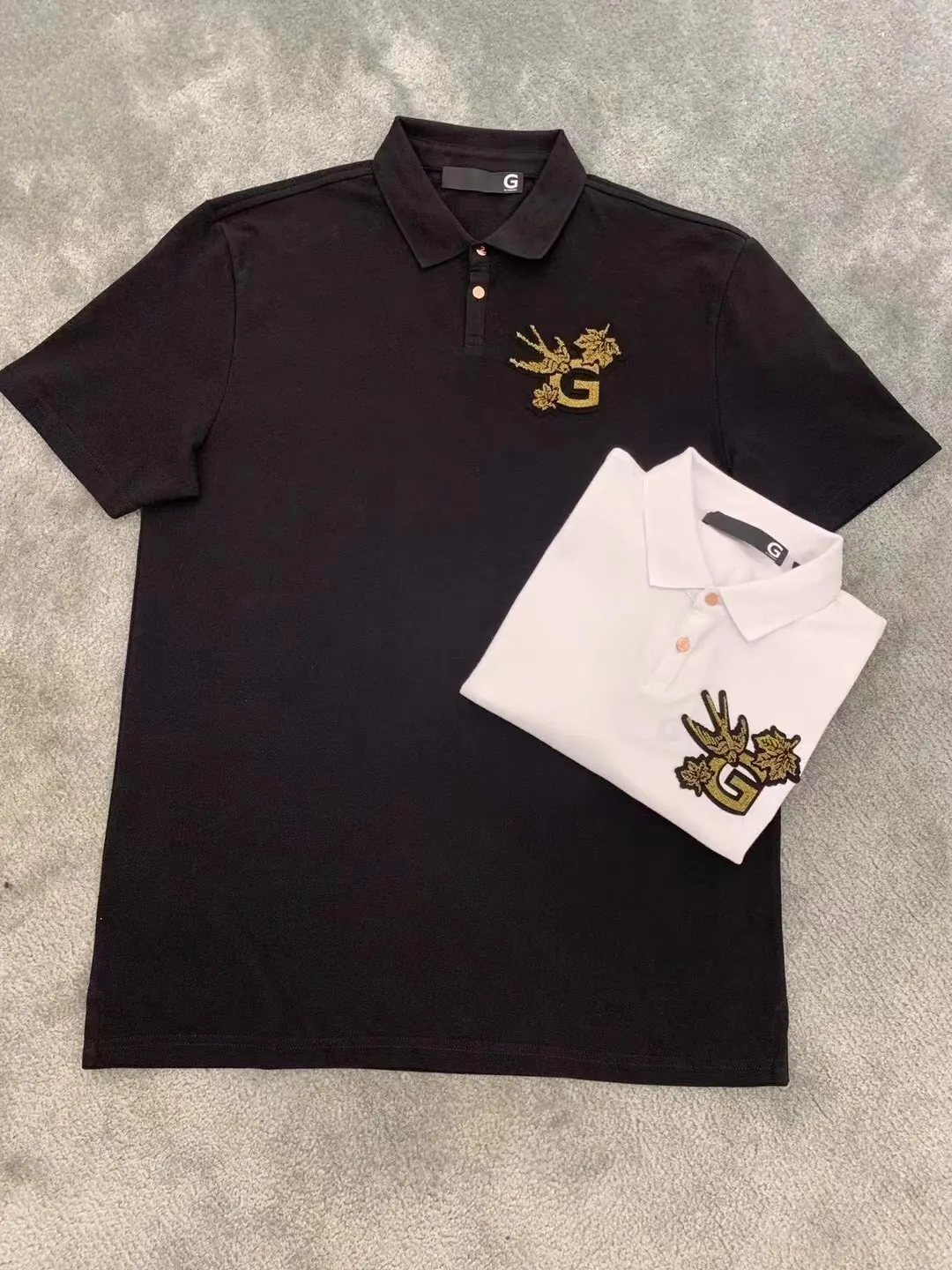
Whether a T-shirt or hoodie can command a premium often depends more on the small chest badge than on the main graphic itself. Luxury ready-to-wear lines typically focus on four requirements for this badge: consistent 3D height from batch to batch, avoiding some pieces looking puffed and others flat; even gold-thread luster, avoiding sections that are bright and others dull; machine-embroidery tension that holds securely without damaging the fabric—high-end lines often use high-count cotton, silk blends, and Sea Island cotton, where slightly heavy clamping can cause thread pulling and wrinkling; and finally, the ability to handle small-batch, rapid style changes—dozens of styles per season and hundreds of pieces per style.
This GIVENCHY gold-thread 3D patch brings these requirements together in a palm-sized area: gold metallic-luster embroidery thread forms the main body, black thread runs the border and finishing, and the center is a raised pile surface. From the front, it has a relief effect; under side lighting, the gold thread shows metallic reflection; to the touch, it has noticeable thickness.
Another practical constraint is easily overlooked: luxury styles have short lifecycles and frequent reorders. The same style may be 300 pieces this year and a replenishment of 150 pieces next year; process parameters, embroidery-thread lot numbers, and design-tape data need to be retained and retrievable. If a factory re-runs trial embroidery for every batch, cost and time become unsustainable.
① Gate one: gold-thread passage. Metallic-luster embroidery thread has a smoother surface than polyester thread, with higher thread-path resistance and lower tensile strength; running machines at standard speed can multiply thread breakage and fuzzing. Our approach is to lower overall thread-path tension, slow the stitch speed, and replace thread guides along the path with low-friction components, so the gold thread is “fed” through rather than “dragged” through. Once gold thread is damaged by tension, it appears as a dark spot on the fabric and may be difficult to repair afterward.
② Gate two: raising the pile surface. Gold thread itself does not provide support; a 3D effect depends on the underlying vertical-pile structure to hold it up. The base vertical-pile density, pile height, and top-thread direction need to be set in layers: if the vertical pile is too dense, the gold thread may not press in; if too sparse, the pile surface may not stand. The gold thread needs to sit stably at the pile tips rather than sinking into the nap; this layering relies on density compensation during digitizing, not on machine adjustment afterward.
③ Gate three: edge finishing. A patch is a standalone piece, so its edges need separate binding or overlocking; otherwise thread ends may unravel after cutting. This step determines whether the patch can withstand sewing, ironing, and repeated washing. Binding width, stitch cycles, and finishing position need to be fixed: too narrow and it may come loose; too wide and it may eat into the design’s negative space.
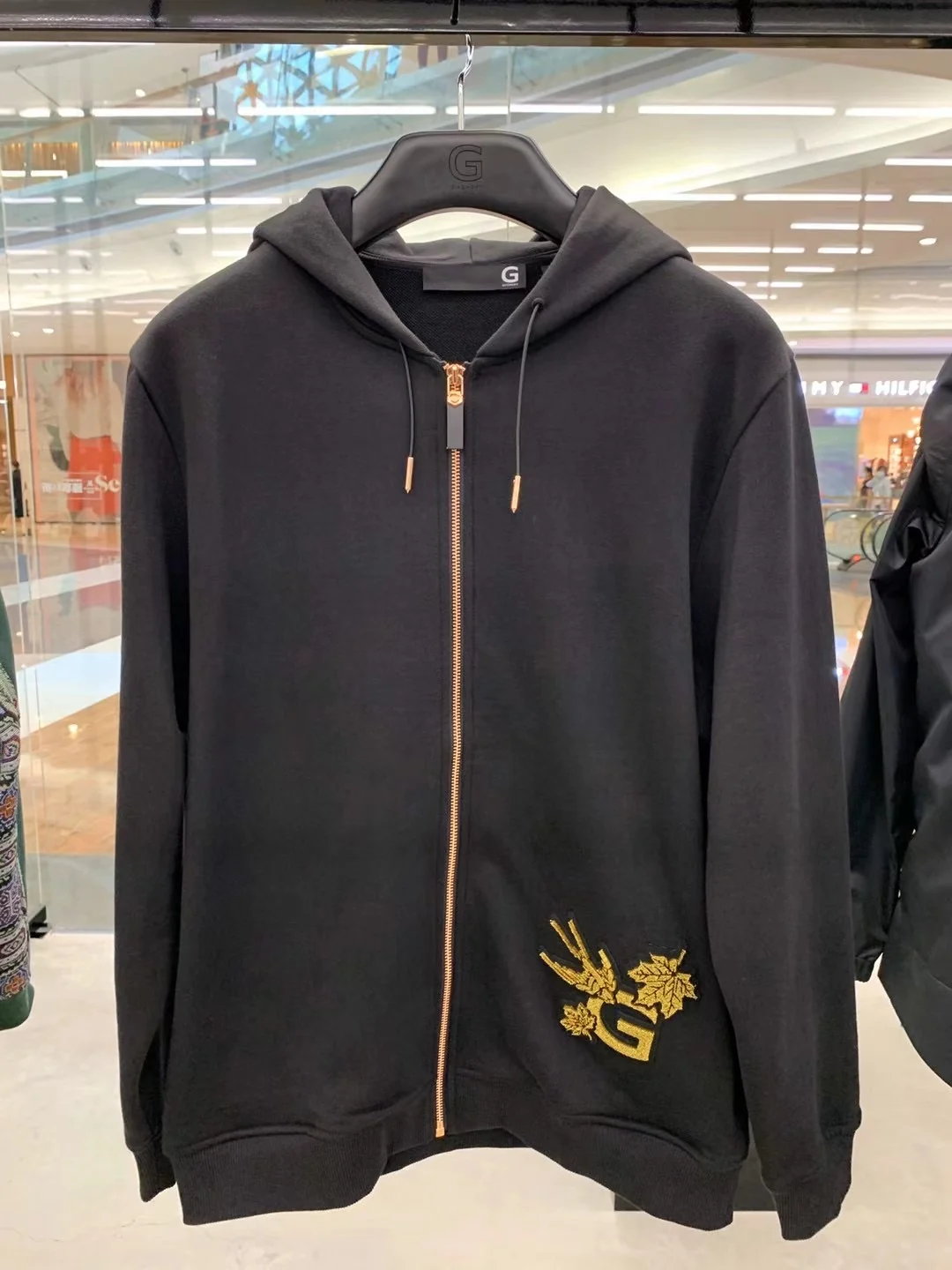
Dobest’s production route for this type of gold-thread 3D patch has five steps: density-compensated digitizing → gold-thread stitching → vertical-pile forming → back-side hot-melt root locking → border setting and full inspection.
Digitizing begins with density compensation: gold thread is thicker than standard thread; denser stitches may pile up thread, while sparser stitches may expose the background. Compensation values need to be calculated during digitizing to reduce trial-embroidery waste. During stitching, tension, speed, and stitch length are locked so metallic-thread luster remains consistent across the whole design.
Vertical-pile forming is the core of this patch: single-face thread stands vertically to create a pile surface with thickness, while gold thread forms a continuous metallic face at the pile tips. Back-side hot-melt root locking secures the thread roots on the back; this is key to resisting fiber loss after washing, achieved through hot-melt locking rather than front-side glue bonding.
Finally, border setting and full inspection: black binding tightens the edges, and finished pieces are inspected one by one for pile-height consistency, gold-thread continuity, and loose threads at the edges; non-conforming pieces are removed on the spot and not mixed into bulk production.
Another hidden cost: gold thread needs batch-by-batch color and luster comparison. For the same black-background gold patch, if embroidery thread from different lots has shade or luster deviation, it becomes visible when combined in the same bulk order; incoming material therefore needs sample comparison first, with production starting after consistency is confirmed.
The finished piece has a 3D front, metallic reflection from the gold thread, and clear thickness when viewed from the side; pile height can be set by design zone, typically in the 1.0–10.0 mm range, with 2.0–3.5 mm common for this type of garment chest patch. The minimum stroke width is recommended to be no less than 1.0 mm; below this width, gold-thread stitching is prone to strand breakage.
In terms of durability, after repeated washing under normal machine-wash conditions (laundry bag recommended, below 40°C), the pile surface is less prone to collapsing, thread roots are less likely to pull out, and edges are less likely to loosen or unravel. The gold-thread areas are stabilized through finishing, maintaining stable luster without affecting visual consistency.
| Comparison | Direct embroidery on garment (direct stitching) | Patch first, then sewing/heat application |
|---|---|---|
| Production timing | Runs at the cut-piece stage; garment panels required first | Can run in parallel with garment production and be scheduled independently |
| Rework risk | Embroidery defects scrap the garment panel, with high cost | Individual patch can be replaced without affecting the garment |
| 3D height | Limited by fabric clamping and tension | Backing can be added for higher-relief 3D effects |
| Hand feel and fit | Integrated with the fabric, without a pronounced hard edge | Edges have binding or back adhesive and are relatively firmer |
| Suitable fabrics | Fabric needs to withstand machine-embroidery tension | Can be added to lightweight fabrics, knits, and leather |
| Unit cost | Lower for large volumes | More cost-effective for small batches and multiple styles |
| Lead-time flexibility | Tied to garment production scheduling | Can be stocked in advance and replenished independently |
This table also serves as our basis for process selection with customers: large-volume basic styles are more economical with direct embroidery, while small-batch multi-style orders, lightweight fabrics, and high-relief requirements are more reliable with patches. The two approaches can also be combined on the same garment—for example, a patch for the chest badge and direct embroidery for large back lettering.
For acceptance, we check item by item by design zone: pile height, gold-thread coverage continuity, binding flatness, and back-side root-locking integrity. The larger the batch, the more important it is to lock parameters within the first few pieces, reducing reliance on manual sorting and touch-up later.
Luxury pieces are often set apart not by large areas of decoration but by the meticulous refinement of a very small label: the path of the gold thread, the pile height, the width of the binding. If any detail is slightly off, the visual balance falls apart. Such details have no shortcut; they are built up bit by bit through equipment precision and embroidery digitizing experience. Over the years, we have stayed on the same path: focusing on R&D, innovation, and custom production of high-end embroidery elements, adding flair to fashion and helping products become timeless classics.
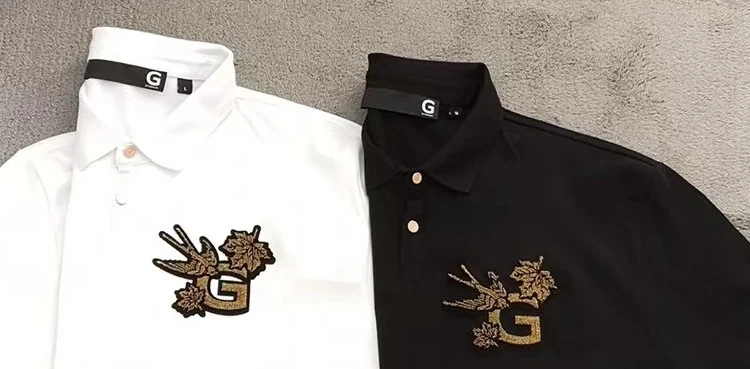
Looking back at this patch, the design itself is not complex; the challenge is making it hold up on both black and white backgrounds—on white, black binding anchors the edges; on black, the brightness of the gold thread sustains the image. One process, two presentations—this is why it can withstand repeated wear.
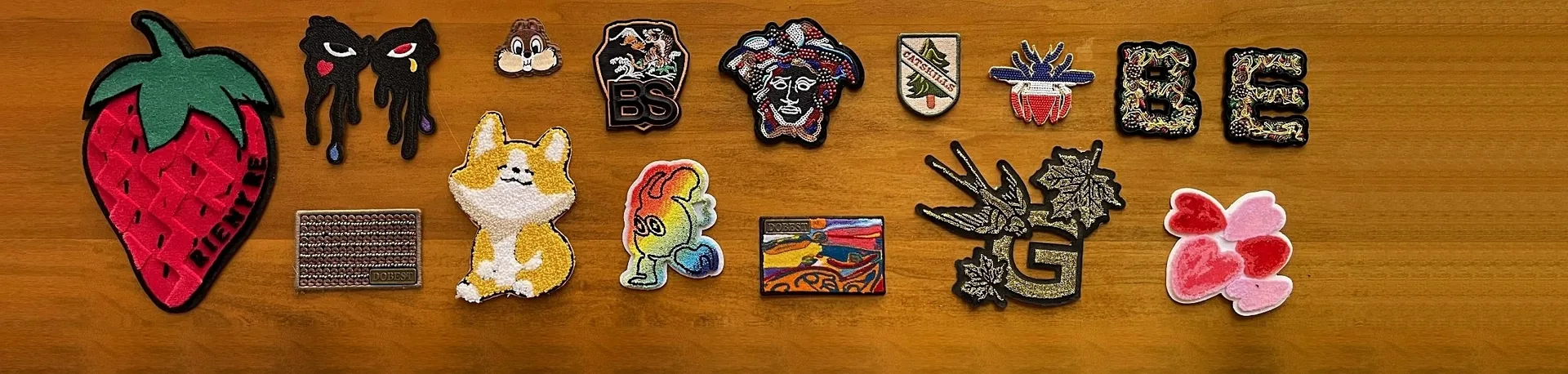
From chest patches for T-shirts and sweatshirts to large lettering on the back of denim jackets and chain-link patterns on bags, Dobest can handle 3D embroidered patches and direct embroidery solutions that combine gold thread with pile surfaces. MOQ: 300 pcs; 3 simple samples free; a sampling fee applies to complex samples, which can be credited when the order reaches the MOQ (300 pcs); samples ready in 24–48 hours (3–4 working days for complex/composite processes); bulk production lead time is normally 5–10 working days, subject to production scheduling confirmation; rush orders can be prioritized in scheduling.
We can meet customers onsite in Pearl River Delta cities such as Dongguan, Shenzhen, Foshan (including Shunde), Zhongshan, Guangzhou, Zhuhai, Huizhou, and Jiangmen; for Guangzhou urban districts and surrounding areas (Haizhu, Liwan, Tianhe, Baiyun, Huangpu, Panyu, Huadu, Nansha, Conghua, Zengcheng) and local Dongguan areas (Humen, Houjie, Chang'an, Dalang, Changping, Dalingshan, Shipai, Chashan, Tangxia, Liaobu, Dongcheng, Nancheng, Wanjiang, and other towns/subdistricts), we can usually arrive within half a day.
For gold-thread 3D embroidered patches or direct embroidery on garments, please contact us. Dongguan Dobest Industrial Co., Ltd. (Dobest): Phone/WeChat 13712297700; official website dobest.hk.
Disclaimer: All cases shown on this page are based on customer-provided logos or design drafts, for which we provide computerized machine embroidery processing or embroidered patch production and delivery; any brand names mentioned are used solely to describe the processing category and craft direction, and do not imply official brand partnership or authorization.

Hotline / WeChat:
137-1229-7700 2/F, Bldg E, Jinmao Xincheng, No.7 Jiedong South Rd, Xiaojiejiao, Humen, Dongguan, Guangdong, China Phone: 0769-81517903
 mclau@dobest.hk
Hotline:
13712297700
0769-81517903